15 insights for the future of engineering consulting in Australia
What will shape the next 15 years?
To mark 15 years of Haskoning Australia, we asked our leaders and technical experts to reflect on the changes, challenges and opportunities shaping water, maritime and coastal engineering.Their perspectives span climate adaptation, artificial intelligence, community expectations, talent, technical excellence and the changing lifecycle of infrastructure. Together, these 15 insights offer a practical view of where our industry is heading and what will be required to deliver lasting value for clients and communities across Australia and the Pacific.
Technical recommendations can no longer focus only on which protective structure to build. Projects increasingly need to consider timing, adaptation pathways and, in some cases, whether protection remains the most appropriate long-term response. “Climate change is really changing our work. It is leading us to ask not only what protection structures we need to build, but when we need to protect and when we may need to retreat,” says Sally Hunton, Principal Structural Engineer.
Population growth adds another layer of complexity, particularly in coastal environments. “We also need to understand how population growth along the coast is placing additional pressure on rivers and estuary systems, and how that should influence our recommendations,” says Greg Britton, Technical Director.
The future of climate adaptation will therefore involve more than individual engineering interventions. It will require flexible pathways that can respond as risks, evidence and community priorities change.
This means keeping community safety and infrastructure performance at the centre of decision-making. Designs need to reflect local conditions, available materials, construction capacity and the realities of long-term maintenance.
Resilience must also address both ends of the water spectrum. While extreme rainfall, flooding and sea-level rise receive considerable attention, drought and water security are equally important. “The drying of the environment is another factor we need to consider,” says Ben Patterson, Technical Director, Rivers and Water Management. “We are adapting our services to address challenges such as water-balance modelling and securing supply during drought. Whether communities are facing too much water or not enough, we need smart and practical solutions to help them navigate these conditions.”
The measure of success is not simply whether a project is delivered. It is whether the solution continues to serve communities safely and effectively over time.
Engineering in sensitive coastal and river environments can affect homes, public spaces, livelihoods and places with deep personal or cultural meaning. Technical analysis alone is therefore rarely enough.
“When I began working in the sector, projects were approached much more from the engineering perspective,” says Greg Britton. “Now, rightly, there is much more emphasis on community consultation. Engineers need to be able to work across stakeholder groups.”
This is especially important when projects address the consequences of earlier planning decisions or when communities face difficult choices about adapting to coastal hazards.
At Collaroy-Narrabeen on Sydney’s Northern Beaches, for example, coastal management involves navigating different viewpoints and helping stakeholders understand the available options, their limitations and their long-term consequences.
The engineer’s role is expanding. Alongside analysis and design, successful projects require clear communication, careful listening and the ability to bring people through a complex decision-making process.
Artificial intelligence will increasingly influence how engineers analyse information, automate tasks and develop solutions. However, its value will depend on the knowledge and professional judgement of the people using it.
“I have lived through the introduction of computers and structural models during my career, but you still need the right skills underpinning the work,” says Stuart Bettington, Technical Director. “I often say that all models are wrong, but some are useful. We need experienced people who can recognise what is useful and interrogate what the technology produces.”
This has important implications for training. Early-career engineers need opportunities to develop strong technical foundations, understand physical systems and learn how to test assumptions. AI should support that development, not bypass it.
“We will continue investing in training and development for graduates and early-career engineers, now with AI as part of that environment,” says Malinda Facey, Managing Director. “Our clients are also at different stages of adoption and understanding, so we still need the fundamental knowledge to explain our recommendations clearly, particularly in dynamic coastal and maritime environments.”
The strongest engineering teams will combine digital capability with technical depth, local knowledge and accountable human decision-making.
Acting in a client’s interests can also mean challenging the original brief or recommending that a proposed project should not proceed as planned. “Long-term relationships have taught me that honesty pays off,” says David Perbey, Business Development Director. “We should not sell clients something they have requested if the evidence shows they do not need it. That honesty also means clients understand that, when we recommend a higher-risk solution, we genuinely believe it is the appropriate response.”
In a more complex industry, trusted advice may be as valuable as technical design.
Technology, collaboration and communication are changing engineering practice, but none of them reduces the importance of getting the fundamentals right.
Clients rely on engineers to make decisions that influence public safety, asset performance and major investments. Quality assurance cannot be treated as a final administrative step. It needs to be embedded in the way projects are scoped, analysed, designed and reviewed.
“Focusing on quality is paramount,” says Alan Rotsey, Associate Director, Resilience. “As engineers, we need to make sure our work is right. A bridge that is 80% right will still fall down. That eye for quality has to underpin the foundations before we turn to the wider project issues.”
As AI and automation become more common, the ability to verify outputs, question assumptions and remain accountable for recommendations will only become more important.
This makes recruitment important, but retention, development and knowledge-sharing will matter just as much. Multidisciplinary teams need to transfer lessons between markets, such as applying coastal-engineering knowledge to riverbank stabilisation or bringing international port experience into local projects.
“Australia has an engineering shortage, and that is particularly evident among maritime and coastal engineers,” says David Perbey. “As an island nation, there are enormous opportunities. People who already understand and enjoy the water may be surprised by the range of careers available.”
Geographic expansion can also create access to new expertise. Haskoning Australia’s Melbourne office is helping build local capacity while adding resources that can support projects nationally.
The industry’s challenge is not simply to fill current vacancies. It is to develop the specialists and technical leaders needed for the decades ahead.
The capabilities needed by the industry are changing, and careers are likely to become more varied as a result. Technical specialists may move between disciplines, markets, project delivery and client-focused roles.
“At university, I did not enjoy structural engineering,” says Sally Hunton. “But when I later joined a structural engineering team, the real-world experience was far more interesting. A few years after that, I moved into maritime engineering and never looked back.”
Being open to unexpected opportunities can reveal strengths that are not always obvious at the start of a career. “When I started as an engineer, I never expected to move into business development,” says David Perbey. “I am naturally quite reserved, but one thing I have learned is to remain open to opportunities and give things a go.”
For organisations, this means creating development pathways that allow people to explore new fields without losing the value of their existing experience. For individuals, it means recognising that a career can evolve without following a single predetermined route.
“Clients are hiring us to solve their problems,” says Stuart Bettington. “If the same model can be produced anywhere using the same software, the question becomes: what else do you bring? Local knowledge, materials experience and an understanding of how environments behave are where much of the real value lies.”
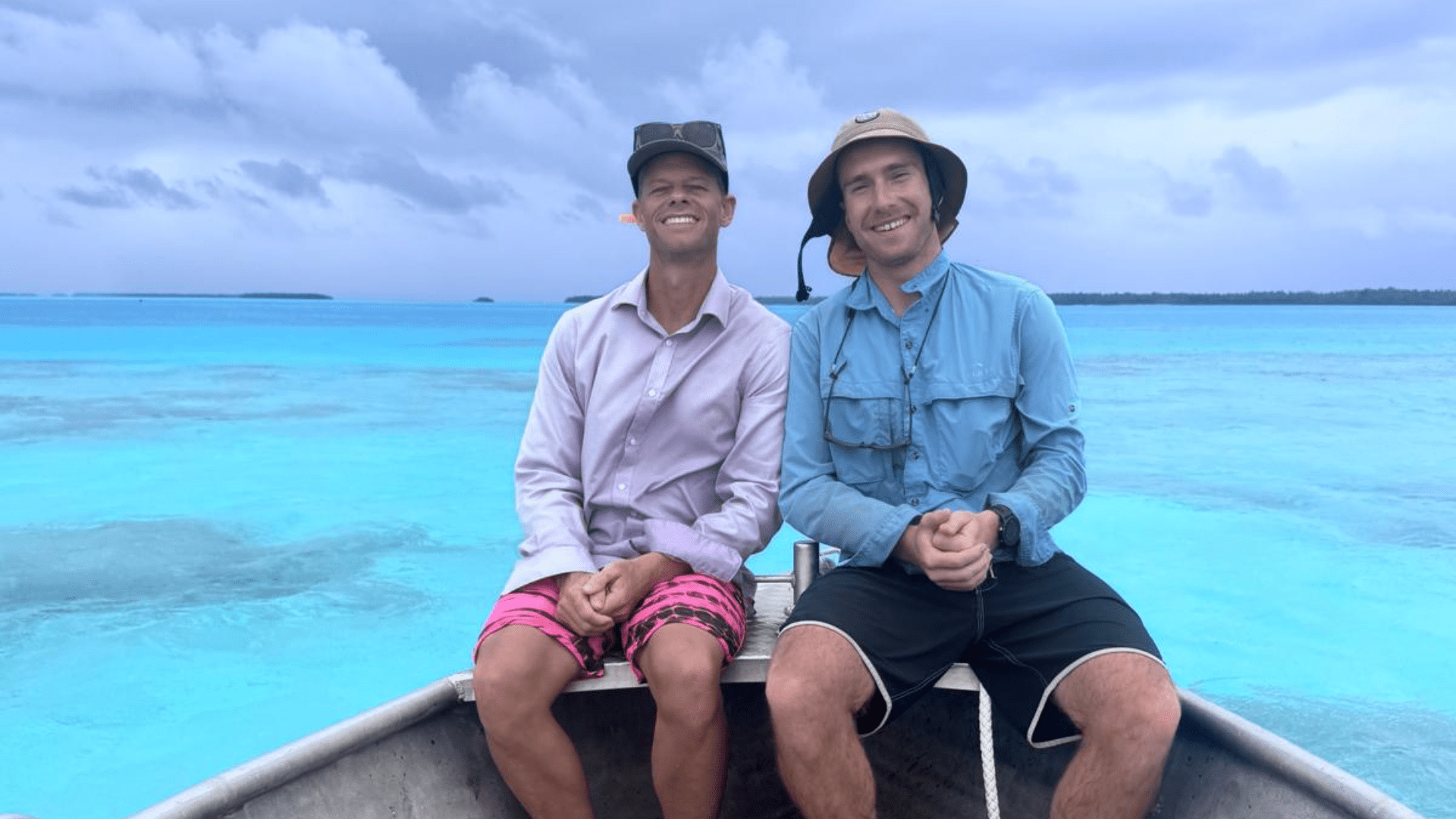
That experience can fundamentally change a project. On a proposed port development in Tuvalu, local site characteristics initially appeared favourable because there was no forest behind the selected location. However, regional maritime experience indicated that the absence of vegetation was evidence of previous cyclone exposure.
That insight led to a recommendation for a more suitable location nearby. It is a clear example of why tools and technical knowledge are most powerful when combined with experience and an understanding of place.
The first is immediate: responding to storms, erosion, asset failure or urgent risks to communities. The second is strategic: helping governments and asset owners establish policies, investment plans and adaptation pathways that reduce future risk.
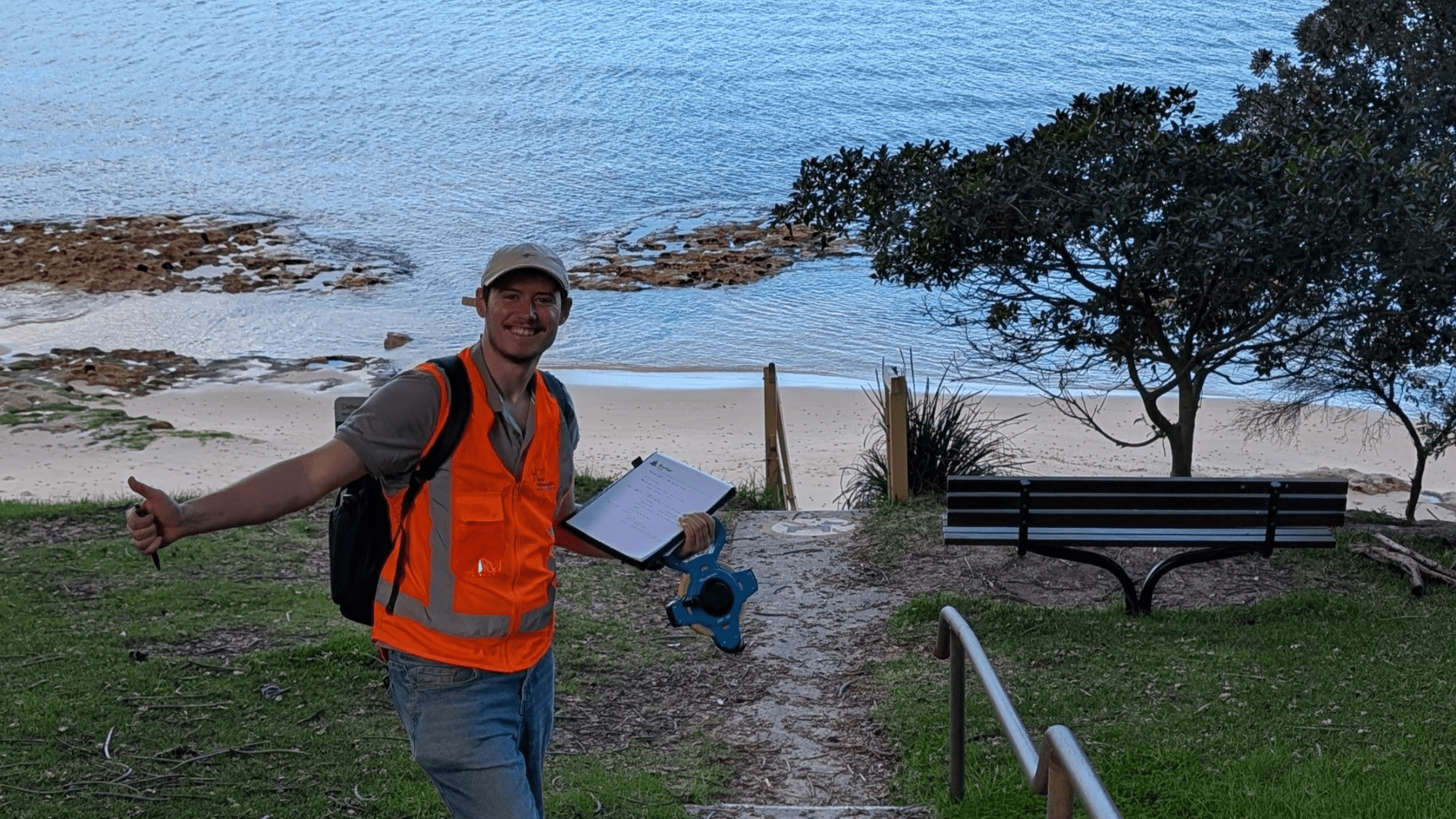
“Following multiple extreme events, I have spent periods working on location during storms and helping protect coastlines and assets,” says Natalie Patterson, Principal Coastal Engineer. “That practical work is then paired with strategic consultation that can influence policy. It shows the broad spectrum of what a coastal engineer can do.”
Emergency interventions save assets and protect people, but they should also create evidence for better long-term planning. Policy, funding and engineering therefore need to evolve together rather than being treated as separate conversations.
Political and funding conditions also influence which solutions can be implemented and when. Technical teams need to understand these constraints without allowing short-term pressures to undermine long-term outcomes. “We need to know how to work within constraints, particularly in coastline management,” says Natalie Patterson. “That means considering a range of adaptive strategies and options that can move communities closer to sustainable long-term outcomes.”
The best solution may not come from one discipline or one intervention. It may be a staged pathway combining practical works, policy changes, monitoring and future decision points.
Materials innovation offers opportunities to improve durability, reduce maintenance and make better use of resources that might otherwise go to waste.
Emerging areas include the use of glass-reinforced polymers in marine concrete applications, where conventional steel reinforcement can be vulnerable to corrosion. Engineers are also exploring ways to reuse dredged material in infrastructure and environmental projects rather than treating it solely as waste.
The opportunity is broader than substituting one material for another. Project teams need to consider availability, constructability, carbon impacts, performance, local supply chains and end-of-life options.
As these materials and techniques mature, successful adoption will depend on robust testing, clear standards and evidence that innovation produces better whole-of-life outcomes.
“When I started, I was often the only woman in the room,” says Natalie Patterson. “It is positive to see more women engineers and more women on the client side. Diversity brings different perspectives, creative ideas and a wider range of skills.”
In the Pacific, community leaders are also creating more opportunities for women to contribute to project discussions and decisions. This can help project teams better understand how infrastructure is used and how benefits and risks may be experienced differently across a community.
Indigenous engagement is another important area of development in Australia. “We are still at the start of our journey, but we have begun work on our Reconciliation Action Plan with an active committee,” says Malinda Facey. “We are committed to learning, bringing our people with us and contributing to meaningful change.”
Diversity should not be treated only as a workforce measure. It strengthens decision-making and helps produce solutions that work for more people.
Australia and the Pacific face distinct environmental, cultural and infrastructure conditions, but they can still benefit from ideas tested elsewhere.
The value of global expertise lies in understanding which principles are transferable and then adapting them to local data, governance, geography and community needs.
A flash-flood warning system developed for Parramatta illustrates this approach. The project drew on technology developed by Haskoning teams in the Netherlands and previously applied in Ghana, before being adapted to local conditions in Australia.
“We knew the underlying technology had worked elsewhere and could modify it for the local information and conditions,” says Ben Patterson.
The resulting system also helped increase awareness of flood risk within the Parramatta local government area. The lesson is not to import standard answers, but to combine global experience with local knowledge to create a fit-for-purpose solution.
This creates opportunities to extract greater value from existing assets, reduce waste and avoid unnecessary replacement.
It is also changing how land and infrastructure are used. Former industrial waterfronts, for example, can be repurposed for public access, recreation and mixed-use development, provided the transition considers legacy conditions and future needs.
Lifecycle thinking changes the central question from “What should we build?” to “What outcome do we need, and how can we sustain it responsibly over time?”
Engineering the next chapter
The next 15 years will bring new technologies, increasing climate pressures and changing expectations about how infrastructure is planned, delivered and maintained.
Haskoning Australia will continue expanding its local capabilities while drawing on expertise from across its global network. The Brisbane 2032 Olympic and Paralympic Games also present opportunities for infrastructure and broader urban-regeneration projects, while investment in resilience, ports, water, energy and sustainable development continues across Australia and the Pacific.
Across all 15 insights, one message stands out: technology and project conditions will change, but effective engineering will continue to depend on quality, judgement, collaboration and trust.
The engineering sector has an important role to play in responding to some of society’s most complex challenges. The opportunity for the years ahead is to develop solutions that are technically rigorous, locally appropriate, practical to deliver and designed to last.