When experience sees what the model cannot
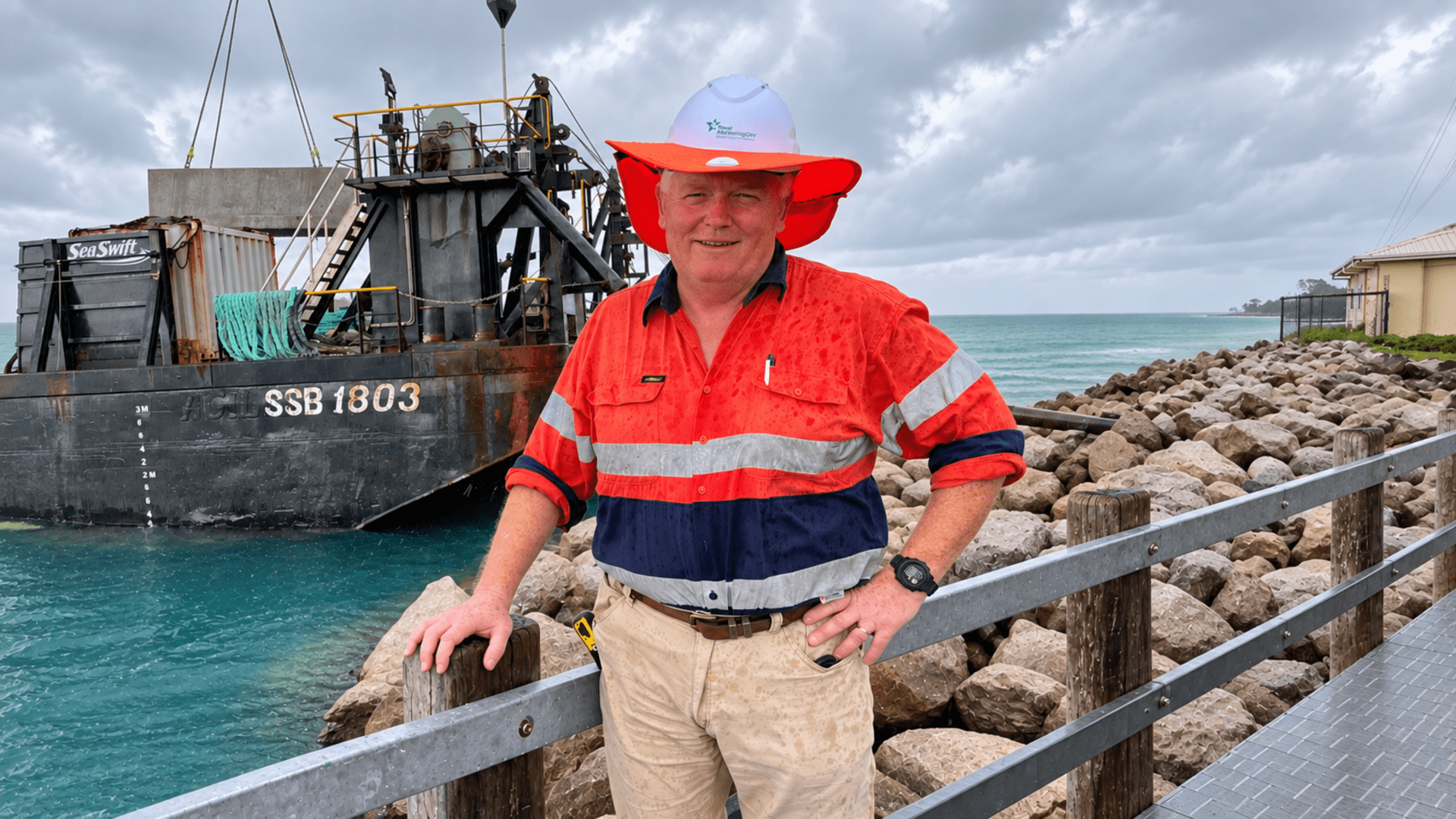
What does your role involve?
As Haskoning Australia's Technical Director Water & Maritime, I design, analyse and assess coastal structures ranging from major ports and harbours in Papua New Guinea through to jetties and community infrastructure in the Torres Strait. My work includes breakwaters, seawalls, dredging projects and understanding how waves, currents and coastal processes affect both infrastructure and the environment.
At its heart, coastal engineering is about creating places that are both functional and resilient. Sometimes that means protecting homes, roads and public spaces. Other times it means enabling major economic development through ports and maritime infrastructure.
In recent years, I’ve been involved in several projects with PNG Ports in Papua New Guinea (PNG). There is often a perception that PNG is a difficult place to work, but my experience has been incredibly positive and rewarding. Over the course of my time working in PNG, I’ve been part of projects that are truly helping to shape the country. We’re now working on larger scale projects that are having a meaningful impact on PNG and its economy.
I’m lucky to feel that I have made strong friendships with the people I’ve been able to work with in PNG and I know that people appreciate what we’ve been able to do.
Similarly, I’ve also had a long-term client relationship working in the Torres Strait Islands, which creates plenty of challenges with its remote location. These projects may not attract the same profile as a major port development, but they have a direct impact on people's daily lives. Through jetties, seawalls, dredging projects and condition assessments, we've been able to support remote island communities and help improve the resilience of essential infrastructure.

Engineering models and technology are powerful tools, but experience is what helps you recognise the things they can't see. Sometimes the most important engineering decision comes from understanding a place, its people and its history.





15 insights for the future of engineering