Smart growth starts with a solid business case
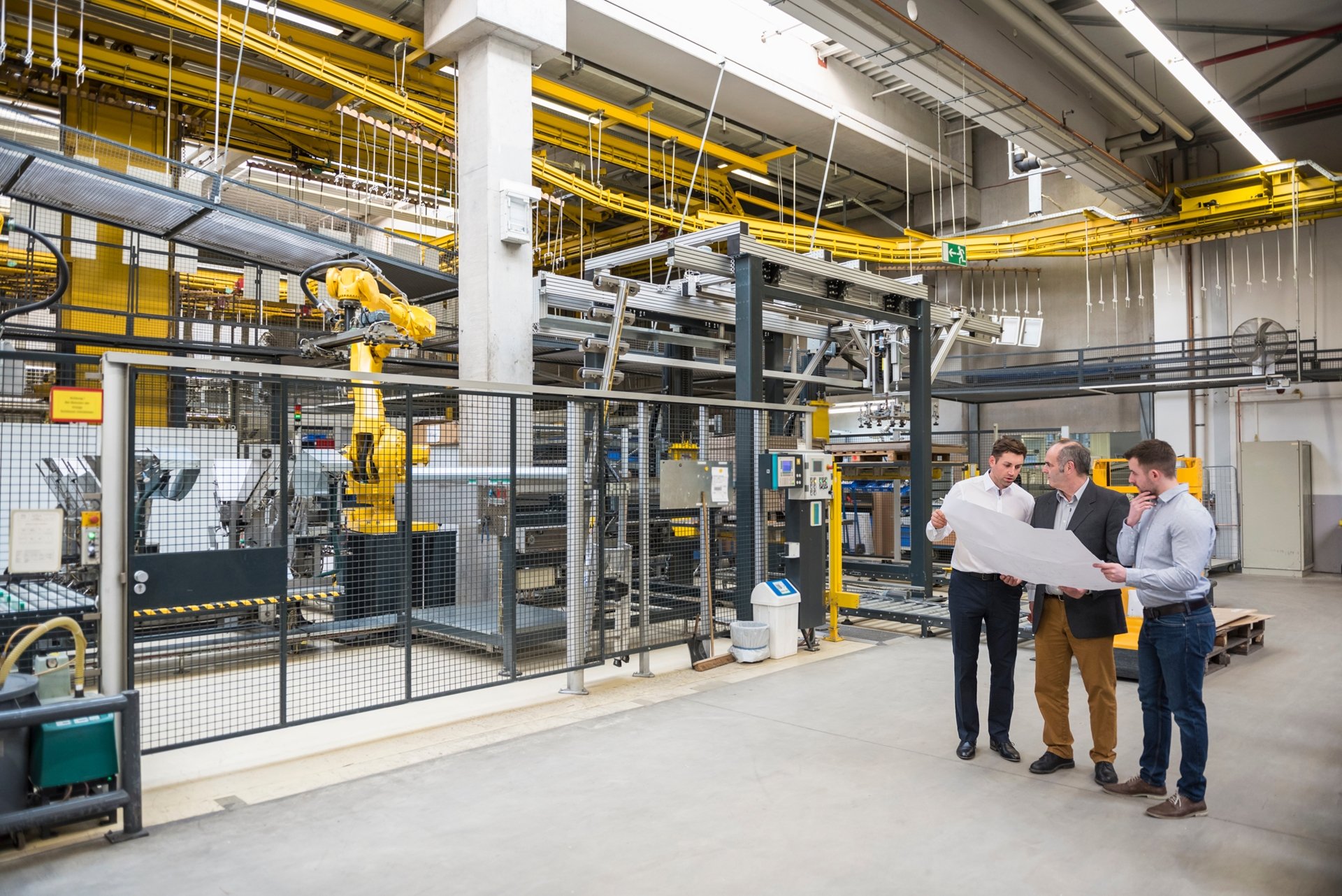
Before breaking ground on a new industrial project, one question looms large: does the plan make sense commercially, technically and financially? A strong business case provides the clarity to answer that question. It’s where strategy, data and feasibility come together to reduce risks and guide smart decisions.
We spoke with experts from Haskoning’s Industry team about what really makes a feasibility study valuable, why it’s about more than just numbers, and how digital tools help companies invest with confidence. But first, they explained, you need to be sure you have defined the right project.
The right question: Why project definition matters
Project definition ensures the solution being built is the solution the business needs. For example, having been asked for a new production line, a simulation might show that fixing a constraint on an existing line delivers the same output for a fraction of the cost. In another scenario, a client came in with a plan for a major water treatment expansion. Early analysis showed the real issue was upstream. Tuning process parameters and addressing the source removed the need for a new plant altogether, saving tens of millions and months of work.
Beyond the numbers: what a feasibility study really is
Many companies see a feasibility study as a financial check or a calculation of return on investment. In reality, it’s much more. A feasibility study is a shared process where ideas, data and perspectives come together to form a realistic foundation for investment.
Managers don’t just want data. They want to understand the story behind it, discuss options and weigh the risks. That process builds confidence in the final decision and ensures that everyone involved is aligned.
A good feasibility study connects business strategy with all relevant realities: financial, operational, technical, risk, compliance, sustainability, social impact, and time-to-value. It brings these perspectives together so teams can make decisions they all stand behind. It’s not just a one-off report, but a guided process that creates clarity before large sums are committed.
What makes a business case truly robust
That means:
● Clear, shared assumptions and goals at the start
● Transparent models that anyone can understand and review later
● Scenario analysis to test different routes and outcomes
● A holistic perspective that covers financial, technical, operational and environmental aspects
When everyone understands how the model works and how decisions are made, confidence in the outcome grows.
Turning insight into measurable results
The true value of a business case becomes clear when it leads to better decisions. For example, a global textile manufacturer asked Haskoning to evaluate future production options. The study led to a redesigned approach that reduced capital expenditure by €33 million and lowered annual operating costs by €3.5 million.
Another client, an engine manufacturer in the United States, used simulation models to test different production layouts before investing. What started as a plan for four new production lines became a data-driven decision to build just two, saving millions in unnecessary costs.
These kinds of results show how combining expertise with advanced modelling turns insight into measurable value.
Looking beyond financial return
Digital tools for smarter decision-making
Modern feasibility work relies on digital intelligence. Simulation and modelling tools help visualise scenarios, test assumptions and make complex decisions easier to understand.
Digital twins, AI and advanced simulations allow teams to compare scenarios, analyse sensitivities and identify the best balance between cost, performance and sustainability. Tools such as the Net Zero Navigator, developed by Haskoning’s Energy & Environment experts, help clients model decarbonisation strategies and energy systems as part of their investment decisions.
These digital tools make projects more predictable, but it’s the combination with human expertise that creates real value. Haskoning’s engineers and consultants use data to inform strategy, not replace it.

Building sustainability in from the start
Sustainability is no longer an afterthought. Integrating it into the feasibility study ensures that new projects are ready for future regulations, resource challenges and stakeholder expectations.
Clients increasingly want to know how renewables, efficiency and circular design will affect their investment case. By modelling these scenarios early, they can make informed choices that improve both financial and environmental performance.
Tools like Net Zero Navigator make it possible to compare different energy and resource scenarios and identify the most future-proof path forward.
Why Haskoning
Haskoning’s approach stands out because it combines broad technical depth with strategic and financial insight. The company is employee-owned and decentralised, meaning decisions are made quickly and close to the client.
Clients appreciate that flexibility, especially in complex projects where timing and precision matter. They also value the combination of strategy, engineering and digital services under one roof — a mix that ensures projects are not just feasible, but built on solid foundations for growth.
A strong business case isn’t just paperwork. It’s your most powerful decision-making tool. Read more on our Industry page.

Solutions for industry

 Industry