Subsidence risk intelligence
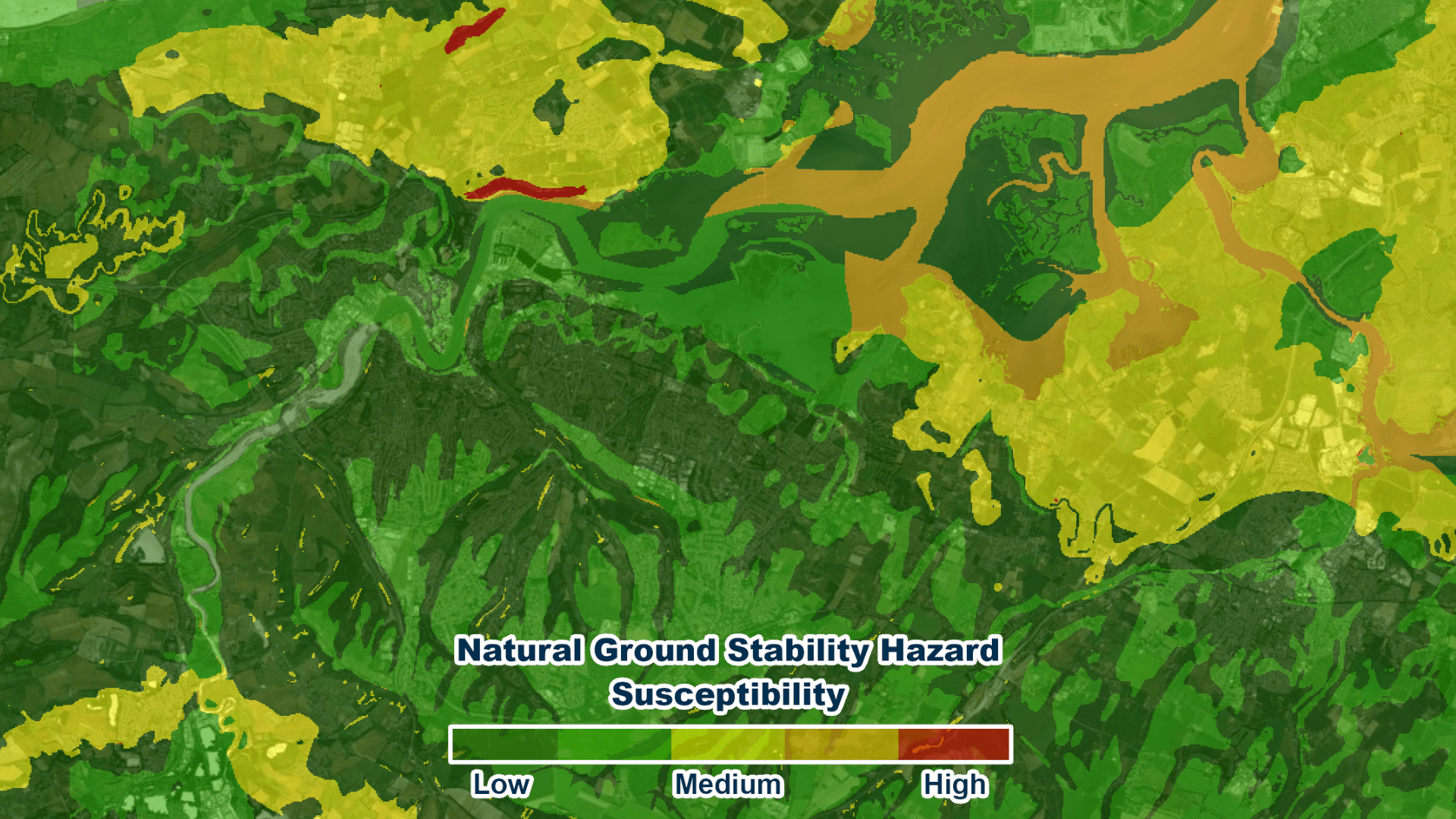
The increasing trend towards hotter, drier summers and milder, wetter winters are causing clay soil to shrink and expand with greater intensity, threatening property foundations and other infrastructure across the country. In the UK, subsidence already costs the economy over £400 million annually, with projections rising to £600 million by 2050 due to climate change.1
To make informed decisions around subsidence risk and susceptibility, financial institutions and insurers need detailed intelligence that accounts for geological and climate impacts.
Twinn’s Subsidence Risk Intelligence delivers property-level subsidence scoring, integrating geological and climate data from the British Geological Society (BGS) and Ordnance Survey address data to create a total risk rating on a 0–100 scale.
We offer SubScore in three levels, Standard, Premium, and PremiumPlus, so you get intelligence that fits your needs and budget. Each incorporates six geohazards – shrink-swell clays, landslides, soluble rocks, compressible ground, collapsible deposits, and running sand – to accurately assess factors like ground moisture variations, slope instability, and subterrain collapses.
Harness Twinn’s tailored subsidence data and insights to:

Reduce exposure
Gain more detailed understanding
of how subsidence risks evolve over time and under different climate change scenarios
Enable appropriate pricing
Assess where adaptation is needed
Provide evidence
Comprehensive intelligence for your sector
Subsidence risk intelligence helps you understand the threat facing properties today, and includes future climate change scenarios to assess how that threat might evolve over time.
With full coverage of Great Britain, it will help you make data-led, strategic decisions.
- Lenders can inform lending assessments by refining mortgage approval processes with subsidence intelligence.
- Insurers can use subsidence information to support underwriting and pricing.
- Large corporations with multiple properties can use hazard maps to evaluate real estate investments.
- Developers and engineering firms can integrate subsidence data into their planning to investigate where further investigation is needed.
- Businesses can support asset viability by incorporating subsidence risk assessments into their long-term climate resilience strategies.
Contact our team today to discover how Subsidence risk intelligence can help your organisation better account for current and future subsidence risk.