From design to detail: Engineering for industry
To understand the value of integrated engineering, we spoke with Edward van Seumeren, Director Advisory Group at Haskoning’s Industry team. He shared how their pragmatic, multidisciplinary approach helps clients achieve safer, faster, and more resilient project delivery.
The overlooked basics of engineering
In many projects, there is extensive time pressure. There is a strong tendency to jump straight into equipment selection or contracts with suppliers. But without looking at the bigger picture, the risks are very high that problems will emerge later in the project life cycle.
Take the example of a food manufacturer that wanted to expand its factory capacity. By immediately focusing on machinery, critical factors such as floor loads, vibrations, and energy connections were overlooked. As a result, adjustments had to be made later, costing more time and money.

Rushing into equipment choices without checking the bigger picture often leads to costly fixes down the line.
Why integrated engineering matters
Integrated engineering brings all disciplines together from the start. Process, piping, mechanical, automation, HVAC, electrical, civil and logistics specialists work as one team, supported by digital modelling and simulation. This prevents clashes, reduces duplication and ensures that safety, compliance and performance are considered in a coordinated way. The outcome is smoother construction and a faster handover to operations.
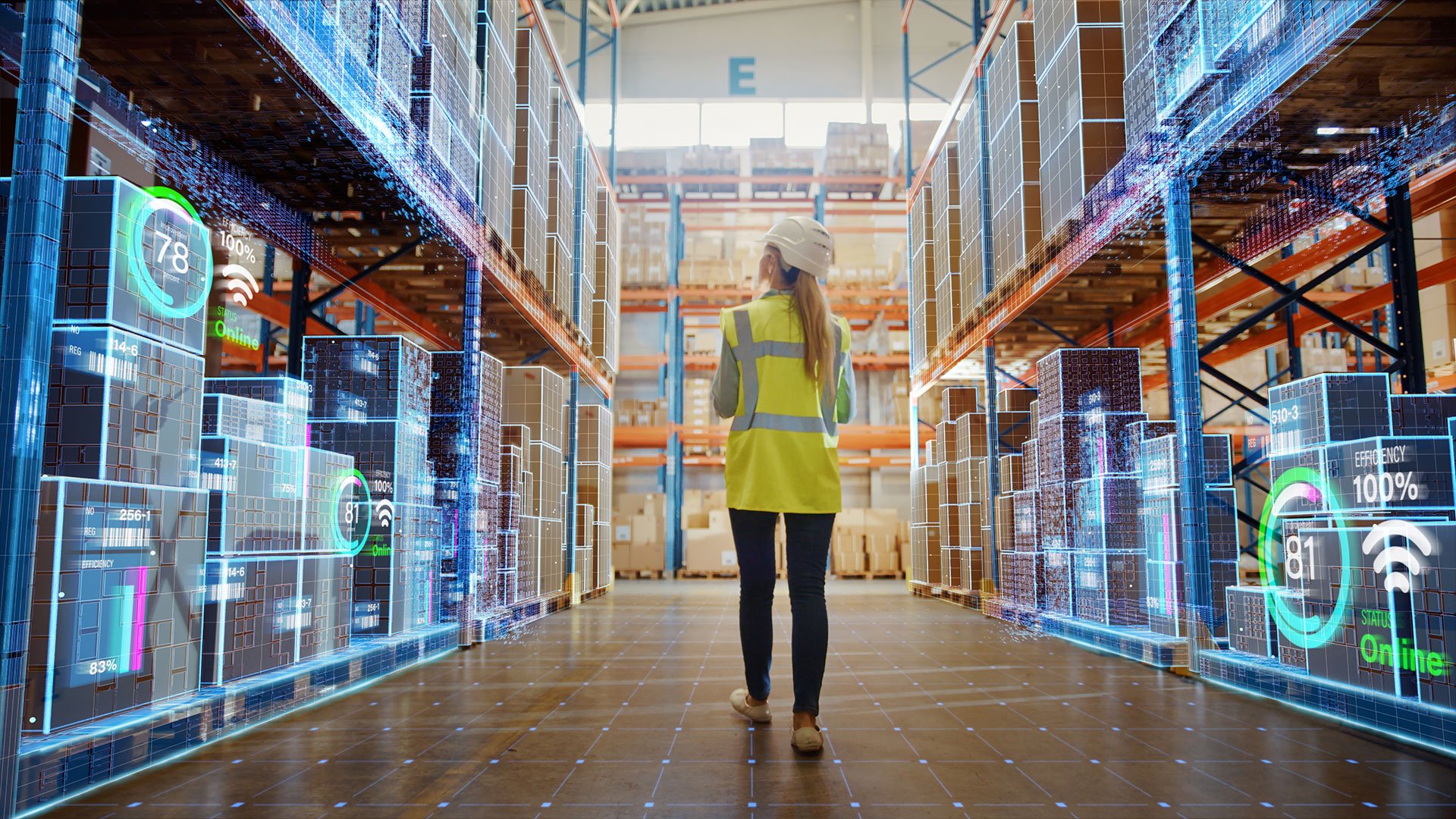
Digital ways of working strengthen this integrated approach. AI, BIM, parametrisation and simulation are embedded in the process rather than treated as separate tools.
● BIM brings all disciplines into one model, helping teams identify issues early and make informed design choices.
● Parametric design allows engineers to test scenarios quickly and compare the impact on cost, performance and sustainability.
● Simulation and digital twins support decisions ranging from logistics planning to process optimisation, and later provide insight during operations.
By combining digital tools with practical engineering experience, teams work with more accuracy, speed and collaboration. The result is a facility that is not only built, but built to perform.
Delivering faster, better outcomes
Traditional engineering can be enhanced by using innovative digital tools such as AI, simulation, and digital twin, which create higher value solutions and more effective, faster results. Haskoning has supported many clients by combining integration with smart use of digital tools. For example:
● A major high-tech manufacturer in the United States used logistics simulations for a new facility. By redesigning the layout early in the process, truck movements and assembly workflows were optimised long before construction began.
● An international food and beverage producer applied digital twin technology to model its cleaning cycles between production batches. Even small time savings per cycle resulted in significant productivity gains across its 24/7 production sites worldwide.
● Parametric design helped balance building height, technical space, light levels, and structural stability in a sustainable wooden tower project. By adjusting parameters early, the optimal design was found without costly redesigns later.
By integrating logistics, building design, and process flows, we help clients achieve designs that perform better in practice, not just on paper.”
Building compliance, safety, and sustainability into design
Every industry has its own rules and regulations. In pharmaceuticals, Good Manufacturing Practice (GMP) ensures medicines meet FDA approval. In food production, HACCP standards safeguard quality and prevent contamination.
Haskoning engineers are trained in sector-specific requirements and regularly work on-site at pharmaceutical and food production facilities across Europe. This hands-on presence ensures that designs not only meet regulations but also align with the client’s operational reality.
By embedding safety and sustainability into the design phase, risks are minimised and compliance becomes a built-in feature rather than an afterthought. Many projects in the industry start with high ambitions for sustainability. If not integrated properly in the project scope and budget, the risk is that these ambitions are not achieved down the line.
What sets Haskoning apart
● Integrated approach: the different disciplines, often from various backgrounds, work seamlessly together in our integrated approach. This often leads to a surprising approach and reduced timelines.
● On-site collaboration: With our on-site experience, we ensure that designs reflect real operating conditions and benefit from fast, practical feedback.
● Global-local presence: International expertise, combined with local knowledge, enables clients like Heineken to build plants in Asia with designs adapted to local logistics and regulations.
● Cross-sector learning: Experience from one sector (e.g., pharma, food, semiconductors) is applied to others, sparking innovation and faster solutions.
Sustainable engineering that makes the difference
Industrial engineering is about much more than drawings and calculations. It is about reducing risks, embedding compliance, and creating solutions that are efficient, resilient, and sustainable. With all disciplines in-house, supported by digital tools and a pragmatic mindset, Haskoning helps clients move from concept to completion without unnecessary delays or costs. This approach also reflects our mission to enhance society together by designing facilities that perform well today and remain responsible and sustainable for the future.
Engineering done right makes the difference between “built” and “built to perform.” Read more on our Industry page.