Manufacturer improves supply chain with integrated data insights
Project facts
- Client
- JDE Peet’s
- Location
- Distribution sites across Europe
- Date
- 2022-2025
- Challenge
- Understand costs to serve to pinpoint efficiencies and improvements
- Solution
- Pilot and implement an automated data integration platform to inform effective decision-making
JDE Peet’s is a multinational coffee and tea company headquartered in the Netherlands. JDE Peet’s has a broad customer base, ranging from individual households to large retailers. To reach the next level in its continuous improvement drive, it sought more detailed insight into supply chain costs to serve. Averages across the supply chain did not provide sufficient detail for the company.
Automated data collection links costs to individual order numbers
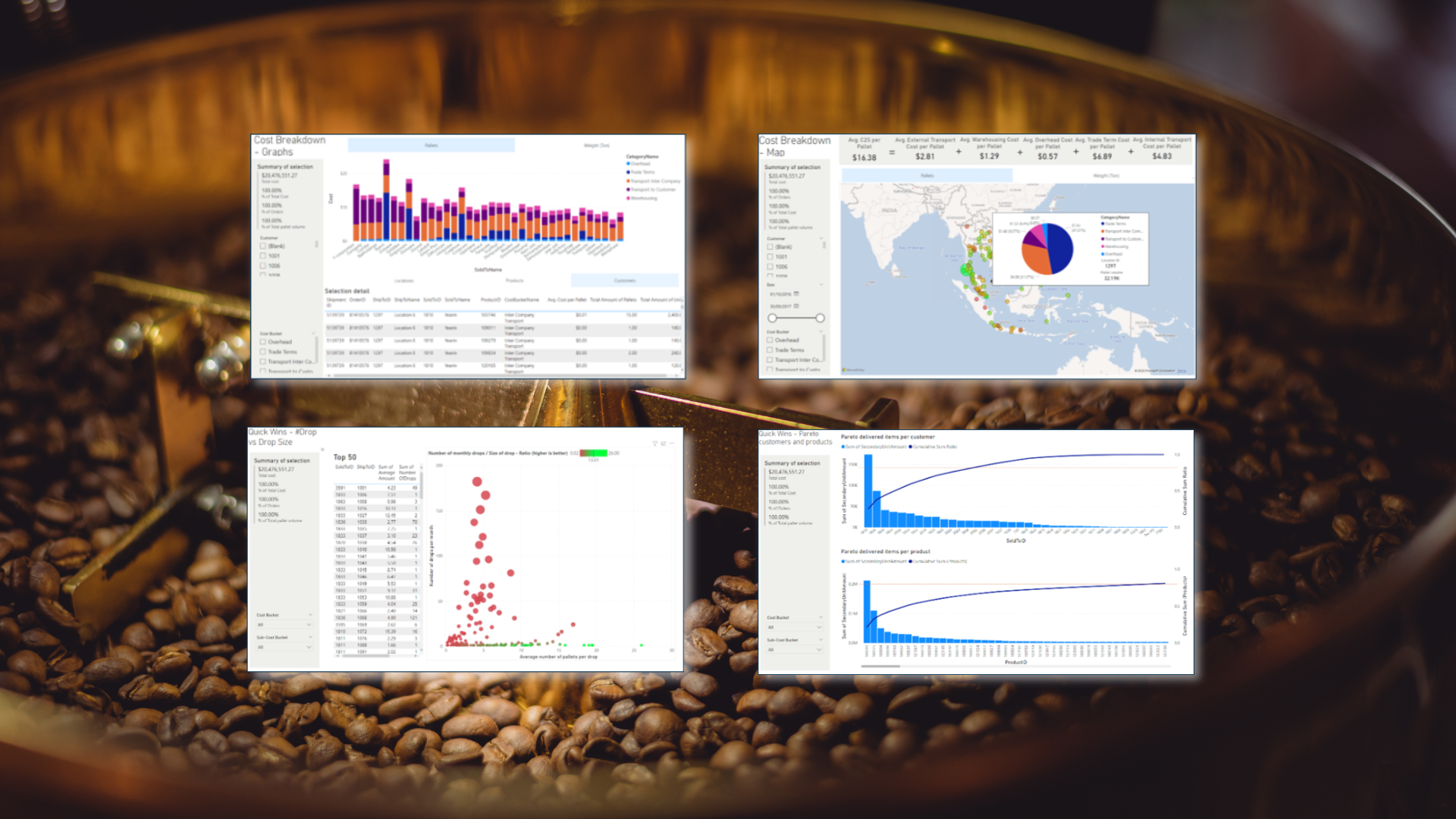
JDE Peet’s engaged Haskoning to implement a cost-to-serve solution across its European operations. The solution is set up to automatically collect and allocate supply chain costs across ordering, customer service, warehousing and distribution, and to highlight where improvements are possible.
We conducted a pilot study in the in Czechia and the Netherlands before rolling out the platform across JDE Peet’s sites throughout Europe. The pilot was accompanied by a training programme to develop in-house competence so JDE Peet’s could operate and manage the tool in-house in the future.
Although we already had a lot of data in our organisation, we saw an opportunity to increase customer-centricity of the available data. The benefit of Haskoning’s cost-to-serve model is that it gathers data from different systems and links it to each delivery. This gives us enhanced insight into supply chain costs at the level of individual customers. For example, it enables us to compare distribution costs for individual customer locations and explore any large differentials we see among the customer base. From there we can identify the optimal delivery options for individual customers and products.
The advanced analytics provide automated suggestions for quick wins and efficiency improvements. Teams can run experiments with the supply chain data and compare scenarios to inform decision-making. This has enabled changes around order patterns, delivery methods and frequency of delivery for individual customers.
“A highlight for me has been seeing the model come to life in countries across Europe and how it has been embraced by our customer collaboration managers. The tool allows us to look not just at costs but also identify where it is worth investing more, for example if customers require weekend deliveries. It enables us to become more of a business partner of our customers, rather than just being a supplier,” Kedy said.
She added that because the project integrates data from across teams in an automated way, it has enabled increased communication between different supply chain disciplines – from sales and finance to logistics and customer service. In doing so, it encourages specialists across the supply chain to identify solutions together based on data-driven, fact-based conversations.
Get in touch
Looking to better understand and improve your supply chain performance? By using advanced analytics and shared data insights, it becomes easier to explore scenarios, align teams across functions, and make more informed decisions, helping you identify practical improvements and respond more effectively to customer needs.
Solutions for industry




Always up-to-date on latest industry insights?