Strategic Marine Net Gain targets for the East Marine Plan Area
Project facts
- Client
- Offshore Wind Evidence and Change Programme (OWEC)
- Location
- UK Wide
- Challenge
- Translate Strategic Marine Net Gain ambitions into a practical framework that can guide coordinated marine restoration and biodiversity recovery at regional scale.
- Solution
- Developed and tested a Strategic Marine Net Gain framework, providing governance, prioritisation and delivery guidance for future marine restoration initiatives.
- Period
- 2025
The challenge
Marine Net Gain (MNG) is increasingly recognised as a key step to halting and reversing marine biodiversity decline, particularly across complex and interconnected marine ecosystems.In 2021, the Strategic Marine Net Gain (SMNG) Task & Finish Group (T&F Group) was established, funded by The Crown Estate through the Offshore Wind Evidence and Change (OWEC) programme to answer a single, practical question:
“How could a future statutory Marine Net Gain obligation be implemented effectively across the UK’s coastal and marine environment?”
To address this, the group delivered three phased pieces of work developed through extensive collaboration across the T&F Group and the wider marine stakeholder community including government, regulators, industry and environmental organisations:
Phase one established a strong national evidence base, combining policy review with extensive stakeholder engagement across government, regulators, industry and NGOs. This process identified a set of strategic MNG targets designed to prioritise restoration where it is most needed, avoid a piecemeal, project-by-project approach, and support progress towards Good Environmental Status (GES) at a UK scale.
Phase two examined existing and planned marine restoration initiatives across the UK and developed a spatial model to explore potential future demand for MNG.
Together, these early phases highlighted both the opportunity for MNG to support coordinated recovery at scale and the importance of translating strategically defined priorities into practical delivery mechanisms.
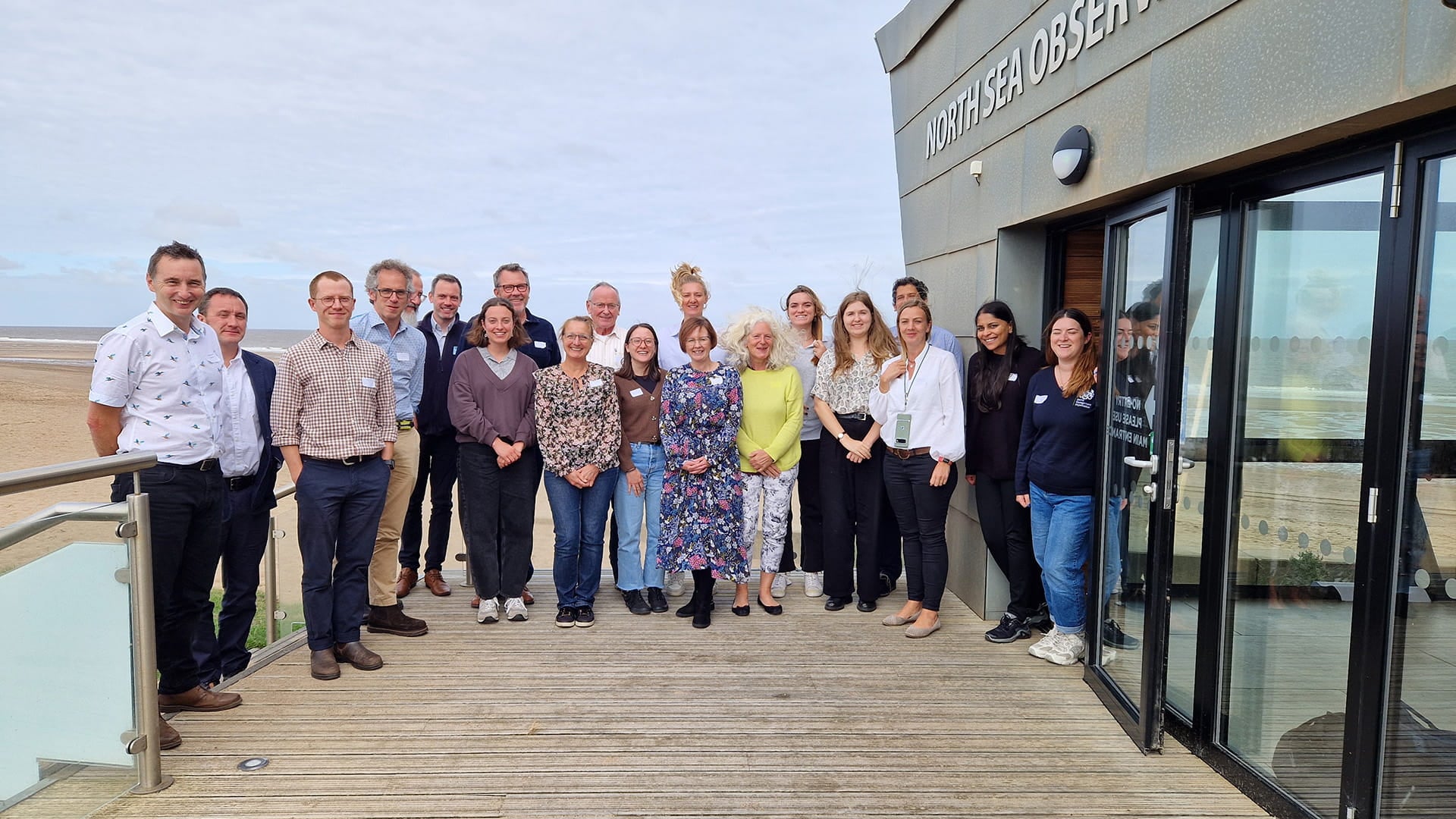
The Haskoning team took on a complex challenge with this work

The result
This work has only been possible through the commitment of Task and Finish Group members and the wider marine stakeholder community, who engaged throughout all three phases. We would like to thank everyone involved for their valuable input and for the constructive and collaborative approach that enabled the Group to develop a shared set of outcomes.
Together, this work has helped define a credible pathway for how future development and pooled funding could contribute meaningfully to marine recovery. The approach is evidence‑based and grounded in consensus across a wide range of marine interests.
If taken forward through future Defra policy, the SMNG framework has the potential to:
- Support large‑scale, coordinated marine restoration.
- Direct investment towards the habitats and locations where it can deliver the greatest ecological benefit.
- Provide a clear and consistent framework for implementation across national and regional scales.
As a result, the project aligns strongly with Haskoning's purpose – enhance society together, by providing a clear and positive pathway towards healthier, more resilient marine ecosystems.
The quality of the reports and especially the final report is superb
The solution
Haskoning joined the Task & Finish Group in 2025 as its newest member and acted as lead consultant for phase three, which focused on translating the earlier national‑level work into practical, on‑the‑ground application.
Phase three centered on a pilot study in the East Marine Plan areas, identified as the region with the highest potential future MNG demand. Drawing on knowledge from the T&F Group and experience from previous phases, Haskoning (as part of the T&F Group) explored how MNG could function within real‑world planning, governance and delivery contexts. This pilot enabled the Group to develop a blueprint for MNG through a SMNG framework detailed in recommendations and guidance, and setting out:
- How MNG could be delivered strategically.
- Clear roles for national and regional governance.
- An approach to prioritising and delivering measures based on national and regional ecological need.
- Practical guidance to support implementation alongside existing marine planning and consenting processes.
The outputs from phase three were brought together into a final report, presenting an evidence‑based approach to MNG that is nationally coordinated but delivered at national and regional scales, enabling investment to be directed in a strategic and joined‑up way to support long‑term ecological recovery at a seascape scale.

Helping clients strengthen coastal resilience
 Climate resilience
Refreshing Englands Shoreline Management Plans
 Climate resilience
Refreshing Wales' Shoreline Management Plans
 Climate resilience
A UK first sandscaping building with nature in Bacton Norfolk
 Climate resilience