Improving water quality and flood resilience at Woodwalton Fen
Project facts
- Client
- Middle Level Commissioners IDB and Natural England
- Location
- Peterborough, UK
- Date
- 2025
- Challenge
- Nutrient pollution, aging flood infrastructure, and environmental constraints.
- Solution
- Hydraulic modelling and environmental analysis, identifying off-site flood storage and water quality strategies
The challenge
Woodwalton Fen, a designated National Nature Reserve and internationally important wetland, has historically been used as a flood storage reservoir. While this supports farmland drainage, repeated flood events have introduced nutrient-rich water into the fen, threatening its delicate ecosystem. With the current flood storage agreement expiring in 2052 and increasing climate pressures, a sustainable alternative was urgently needed.
Key issues included:
- Nutrient Loading: Floodwaters introduced high levels of nitrogen and phosphorus, degrading sensitive habitats.
- Aging Infrastructure: Some flow control structures and embankments required upgrades or decommissioning.
- Environmental Constraints: Any solution had to protect biodiversity, comply with reservoir safety regulations, and integrate with the broader Great Fen restoration project.
The solution
Haskoning led a comprehensive options appraisal, evaluating 24 potential interventions. A shortlist of 14 options was developed and tested using hydraulic modelling, economic analysis, and environmental appraisal. Key strategies included:
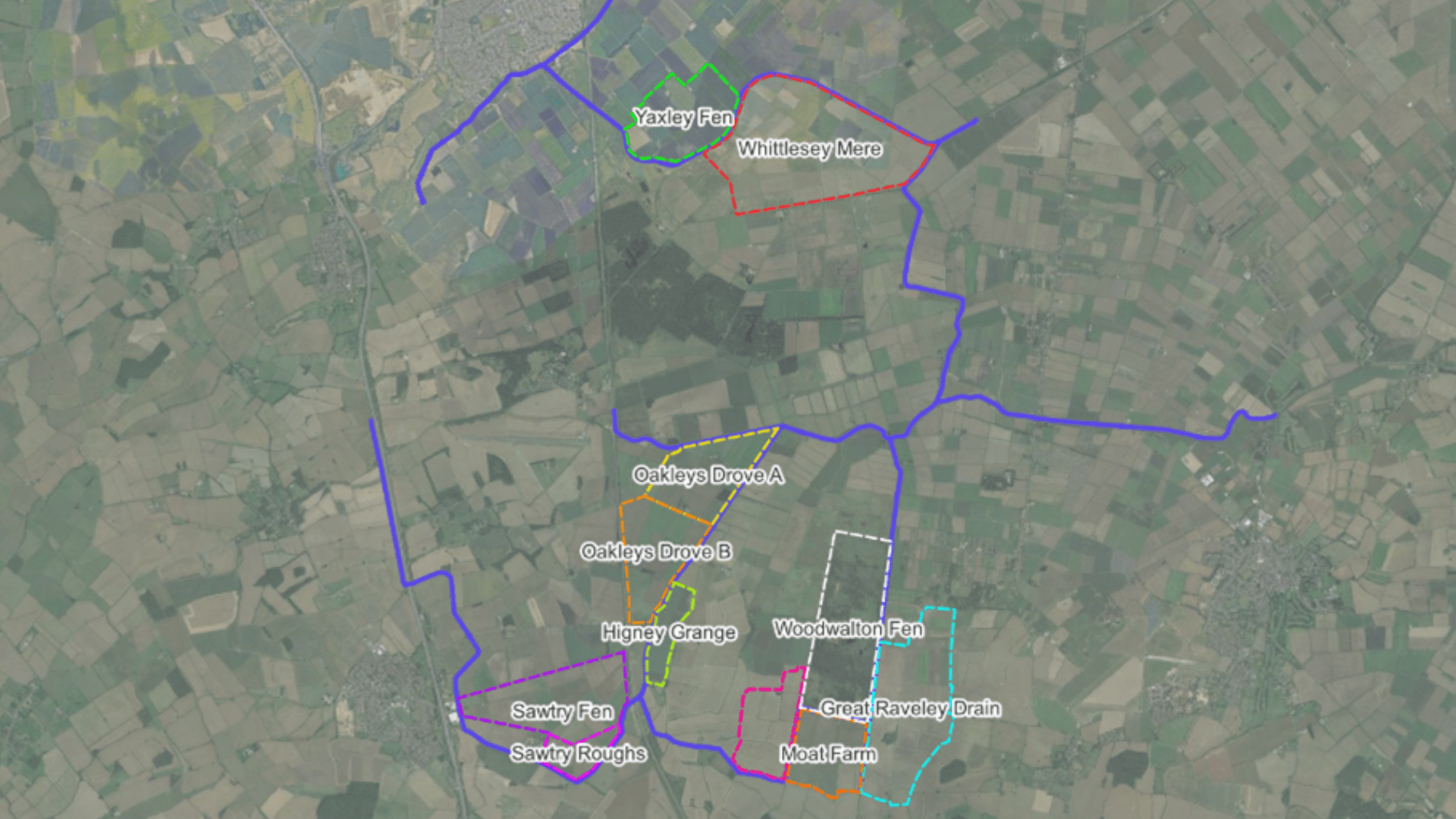
- Alternative Flood Storage Sites: Multiple off-site reservoir options were assessed, including Oakley’s Drove, Sawtry Fen, and Whittlesey Mere, to replace Woodwalton Fen’s flood storage function.
- Water Quality Improvements: Options aimed to reduce nutrient inflow to the fen and provide controlled water storage for drought resilience.
- Hybrid Benefits: Several options combined flood mitigation with habitat creation and water supply.
The leading options—such as Option 12: Oakley’s Drove Flood and Water Storage—offered the best balance of environmental benefit, flood risk reduction, and economic value.

This study addresses the deterioration of an important protected ancient fen whilst preserving its current flood alleviation function. It also seeks to add water storage to adapt to a catchment with increasing water scarcity as a result of climate change.
The result
The appraisal delivered several key outcomes:
- Strategic Clarity: A clear roadmap for replacing Woodwalton Fen’s flood storage role while enhancing its ecological condition.
- Informed Decision-Making: Multi-criteria analysis and benefit-cost ratios guided the selection of viable options.
- Environmental Gains: Preferred options support biodiversity net gain, reduce carbon emissions, and align with the Fens 2100+ strategy.
The project now moves into detailed design and stakeholder engagement phase.

Want to know moreor got a question?
Contact our Climate Resilience experts!