Training tomorrow's engineers with Witness Simulation Software

Manufacturers are facing pressure to innovate, and universities are rethinking how to train engineers of the future. In response to these challenges, Michigan Technological University (MTU) has introduced Haskoning’s Witness simulation modelling software into its curriculum for manufacturing and mechanical engineering, and the results have been emphatic: stronger student engagement and a closer connection to real-world manufacturing challenges.
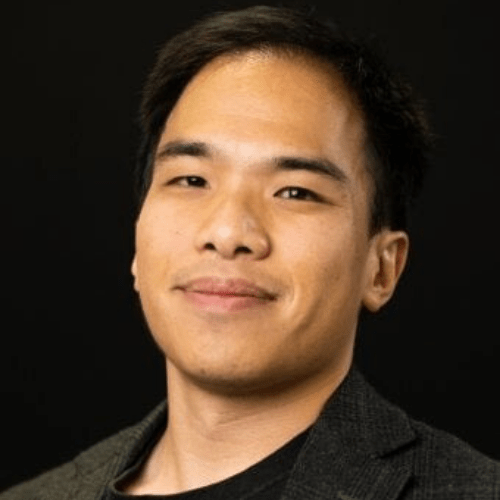
Dr. Vinh Nguyen is Director of the Michigan Technological University Center for Artificial Intelligence, Assistant Professor in Mechanical and Aerospace Engineering, and coordinator for the university’s Introduction to Manufacturing & Mechanical Engineering course. We chatted to him about the impact of introducing simulation, the trends he’s seeing across manufacturing, and how academia and industry can better prepare tomorrow’s engineers.
Why did you integrate Witness simulation software into the course?
Dr. Nguyen: Historically, the Intro to Manufacturing & Mechanical Engineering course focused heavily on materials processing. However, it’s the only required manufacturing course our mechanical engineering students take, so we wanted to expose them to broader manufacturing concepts they encounter in industry. So elements like lean principles, facility optimisation and workflow design. Witness gives us a way to bring those dimensions without the need to build complex physical labs.
The decision to use Witness was also motivated by student feedback. Many of them join the course following internships at innovative companies; some even hold Six Sigma Green Belt certifications. They wanted the curriculum to reflect the realities they’d seen – from cycle times to labour dynamics and organisation charts.
Ultimately, our goal was to give students more hands-on, experiential learning. Physical lab setups are expensive and time consuming, but Witness allows us to simulate lean practices, Six Sigma concepts, and facility layouts. When we first demonstrated utilisation and labour population in Witness, it immediately resonated: “This is exactly what I saw during my internship!” was one student's response.
How are you using Witness with students?
Dr. Nguyen: We use Witness in two main ways: lab assignments and a course-long project.
One of the most effective assignments is having students use Witness to build a simulation of a toy manufacturing operation. They programme cycle times, machine breakdowns and other variables, and then compare two facility layouts to evaluate throughput – developing their understanding of why one configuration outperforms another.
Another assignment focuses on Six Sigma. Students assign distributions to cycle times and then try to reduce the variation while keeping the average cycle time constant. In theory, this shouldn’t meaningfully change long-term productivity, but the simulation shows that it does. This counterintuitive result illustrates the core idea behind statistical process control: reducing variation matters. Witness makes that concept visible in a way that theory alone doesn’t.
For the course project, students start by designing a three-component assembly in CAD before developing a process chain. They use Witness to build facility layouts, propose lean improvements, and conduct cost analyses.
What skills do students gain from using Witness?
Dr. Nguyen: One of the biggest benefits is that students learn how to work with simulations. Of course, there’s a multitude of simulation software out there – but Witness stands out. For example, when students undertake Six Sigma or statistical process control distributions, they can manipulate the random number generators directly. Other simulation software packages have this feature, but they’re not as clear. With Witness, students develop an understanding of how randomness and statistical inputs influence manufacturing outcomes.
Students also build an appreciation for unit discipline through using the software. Because Witness is unit-agnostic (as long as you remain consistent), they learn the importance of aligning units throughout a process. That’s a skill that translates everywhere in engineering.
What has student engagement been like?
Dr. Nguyen: Students are often wary when we introduce new tools. However, the Witness rollout was remarkably smooth.
Students were able to jump straight into modelling and experimenting. They quickly appreciated how much more they could explore through simulation than they could in a single lab session. Using Witness, they can test layouts, run scenarios, tweak parameters and immediately see the impact of their decisions – this isn’t possible with deep drawing or an extrusion setup.
Now we’re exploring ways to integrate physical labs with Witness simulations. For example, we’re considering a physical assembly workstation that students model and optimise in Witness. The combination of experience and digital experimentation is something students are enthusiastic about.
What’s been especially interesting is how often students are experimenting on their own with Witness. At MTU, we talk about the 3 Es of teaching: explore, explain, empower. Witness has become a natural catalyst for the empowerment element. After learning the basics, students frequently come back saying, “I found a feature you didn’t cover in class, can I use it in my assignment?” This is exactly the kind of empowerment we’re aiming for.
Students were able to jump straight into modelling and experimenting. They quickly appreciated how much more they could explore through simulation than they could in a single lab session.
What trends are you seeing in the automotive and manufacturing industries?
Dr. Nguyen: The external advisory board for the mechanical engineering programme – which includes leaders from John Deere, GM, Nexteer Automotive, Ford, 3M and Kimberly-Clark – meets regularly. One theme that consistently comes up is that fundamental understanding matters more than ever. There’s an enormous range of digital tools available, but even the best tools are useless without engineers who understand underlying principles.
AI is a good example. AI can’t read your mind; it can only work with the context you give it. In the controlled environment of a class assignment, students know boundaries and can prompt effectively. But the real world isn’t like that. If a manager says, “The process is out of control, tell me why,” you need to know whether to reach for an X-bar R chart, an I-MR chart or something else entirely. Without that knowledge, AI can’t help you. We’re already seeing this in industry. Engineers who rely heavily on tools without understanding the fundamentals end up misdiagnosing problems.
Based on those trends, what skills are employers looking for from graduates?
Dr. Nguyen: Employers are looking for graduates who can combine critical thinking with practical skills. Lean thinking tops the list, not just in manufacturing but across many sectors. Companies want people who instinctively question processes, identify waste and look for opportunities to standardise.
Ultimately, the role of the engineer is evolving, but the digital tools we’re adopting – including simulation and AI – make the fundamentals even more important. That’s one reason Witness has been so valuable. Even though there’s no guarantee students will use it in their future jobs, it trains them to think critically, apply lean concepts and stay curious.
----
Dr. Nguyen started his appointment as an Assistant Professor at Michigan Technological University in 2022, where his research focuses on advanced manufacturing through Industry 4.0, human-robot-machine interaction, and physics-based/data-driven modeling. Dr. Nguyen has developed solutions for a variety of production processes including machining, additive manufacturing, metal forming, and robotic assembly to promote smart and sustainable manufacturing. Dr. Nguyen also conducts research in general industrial automation including autonomous vehicles and industrial robotics. Prior to his appointment at Michigan Technological University, Vinh was a National Research Council Postdoctoral Fellow at the National Institute of Standards and Technology from 2020 to 2022. He received his PhD in Mechanical Engineering and his MS in Mechanical Engineering and Electrical & Computer Engineering at the Georgia Institute of Technology in addition to receiving his BS in Mechanical Engineering and Electrical Engineering from Rensselaer Polytechnic Institute.