Adaptive pathways: a long-term approach to coastal management
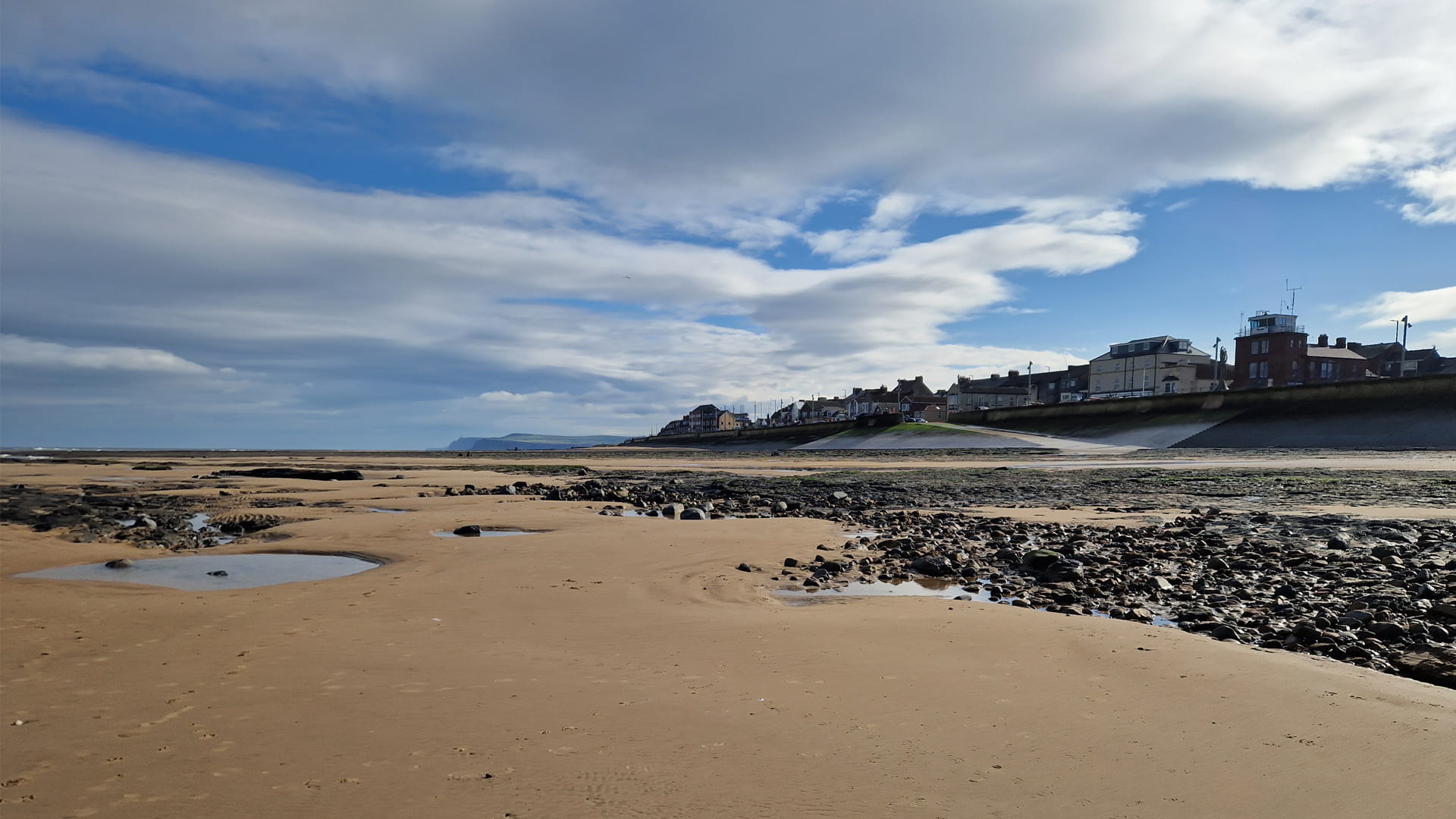
The beach at Redcar in February 2024, showcasing the impact of Storm Babet in the previous year. © Haskoning 2024

RubenBorsje
Ruben is a Senior Consultant and Associate Leading Professional Flood & Coastal Resilience, with a strong focus on nature-based solutions. He uses the UK’s extensive coastal monitoring data to inform and improve decision-making in coastal policy, strategy and infrastructure planning. His expertise includes innovative approaches and digital tools. Recent work includes key contributions to NCERM2 methodologies, and the analysis for the Bacton Sandscaping Scheme, where he played a key role in developing a digital twin to support long-term monitoring and management.
Storm Babet’s story is similar to many other UK storms: communities are left reeling as their daily lives are disrupted and property is damaged or, worse, written off or lost. Prompted by such a major event, political leaders allocate spending to plug the gaps to repair, reinforce or build new defences – interventions which do not always align with the long-term plans and have the potential to reinforce unsustainable situations.
A study into the local impacts of this storm has revealed important lessons, which advocate new ways of thinking about our coastline, how we respond to storm events, and how we plan for a more climate-resilient future.
The story of beaches, storms and our response
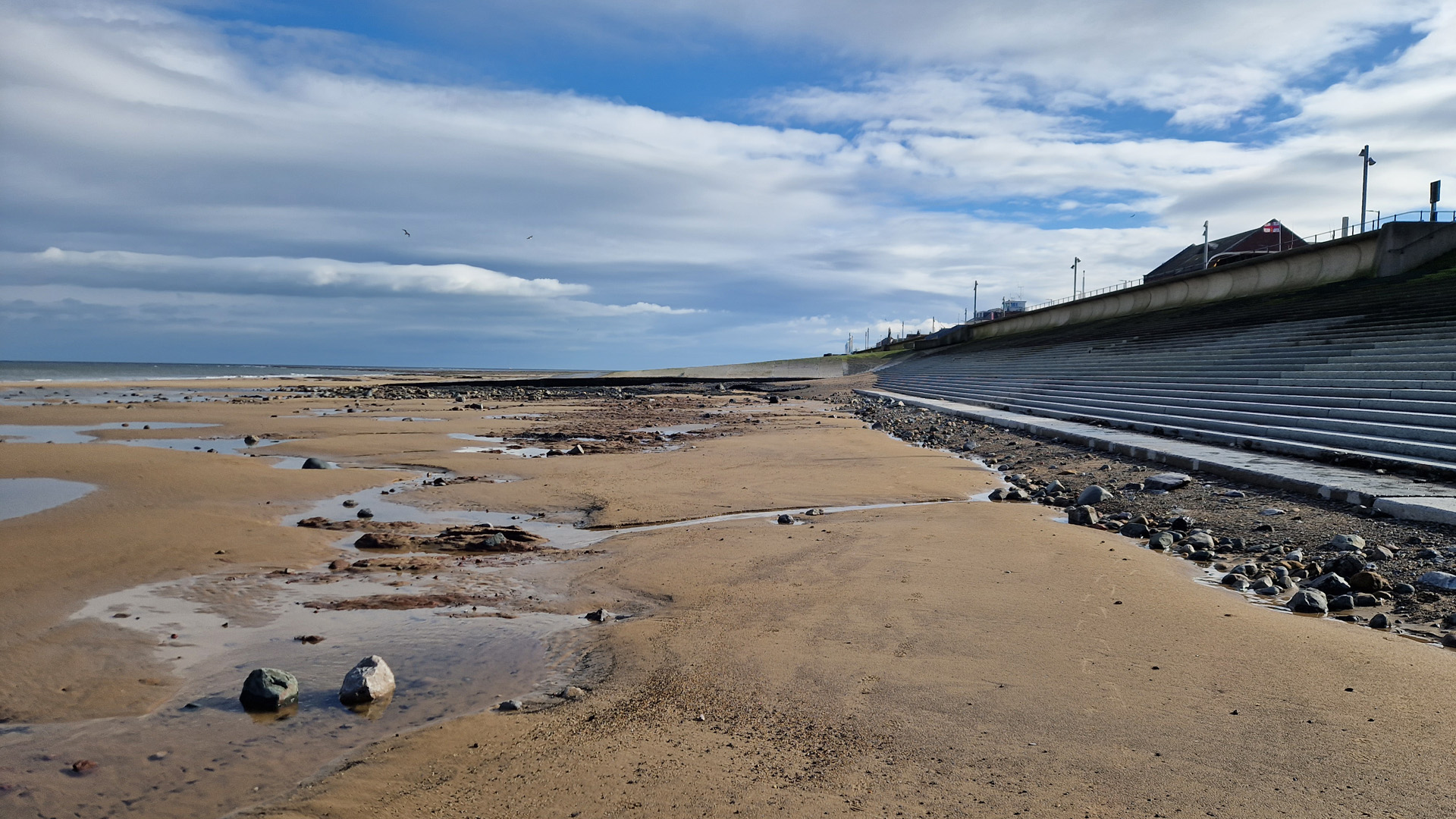
In East Lothian, in the wake of Storm Babet, the Musselburgh coastline saw five years’ worth of erosion in one event. In County Durham, at Seaham, Storm Babet eroded the platform of colliery spoil by as much as 2m, leading to further exposure of fragile and toxic coal waste deposits. At Redcar, the beach reached its lowest levels in more than a decade, exposing the petrified forest, and fishermen were unable to launch from the town’s main slipways.The instinctive response to these events is often one of concern, frequently resulting in calls for immediate action to restore the beach to its pre-storm condition. This usually involves significant unplanned investment of capital and resources, often directed toward rigid or fixed solutions. Solutions that might have unwanted impacts on surrounding communities (e.g., increased erosion) and the environment but ultimately also prevent, or at least hinder, the local community’s long-term transition planning.
Redcar & Cleveland Borough Council chose a different path in the wake of Storm Babet. They developed a new beach management plan for the stretch of coastline from South Gare to Hunt Cliff, focusing on understanding the natural coastal system. This plan aims to guide management decisions within the framework of the existing Shoreline Management Plan.
The UK’s pioneering role in coastal management
Such an undertaking is possible in part due to the UK’s place as a global leader in coastal monitoring and management frameworks. The Shoreline Management Plans (SMPs) are part of a framework that the UK has had in place for its coastlines since the 1990s, providing a strategic approach to managing coastal flood and erosion risks over the short, medium and long term.
Without being statutory, the SMPs still carry significant influence. Today, every stretch of coastline in England and Wales is covered by an SMP – and the model has been adopted by other countries, such as New Zealand. In parallel, the UK has a long history of structured collection of coastal monitoring data; in some locations since the 1950s, though more generally since the 1990s and early 2000s. Combined with other sources, such as historical aerial images and OS Maps, the UK benefits from some of the most extensive historical data on its coastlines.
In response to a beachfront at alarming levels of erosion, Redcar & Cleveland Borough Council, in collaboration with Haskoning, used this data as the foundation for its beach management plan, assessing whether urgent interventions were necessary or if natural recovery could be expected.
Is erosion the enemy?
As part of the Haskoning team who analysed that data back to 2010, we found that the beach at Redcar is part of a dynamic system. Although transport of sediment along the coast is limited, the upper beach is volatile in response to storms: sand is removed from the beach during storm events and gradually returns during subsequent months to years.
Storm Babet was a significant event, with 68% of sediment accumulated over the previous 14 years lost during a short period of stormy weather. Yet, the data suggests the beach is likely to be on a path to recovery, with natural processes expected to restore it within three to five years.
Our research revealed a resilient coastline, one in which erosion is part of a long-standing, cyclic natural pattern. The beach management plan concluded that no urgent mitigation was needed – just a close eye on the condition of the defences and the development of beach levels. In the case that the beach is not recovering as expected, there is enough resilience in the system for future mitigation. Investment will be needed eventually, but this is a long-term consideration that the council now knows it has time to plan for.
This conclusion might be hard to imagine when revisiting the conditions in the wake of Storm Babet or speaking to those whose lives were disrupted or property damaged. But it is an outcome that invites us to view significant events within the broader context of long-term coastal change and to shift from reactive responses to adaptive, forward-looking strategies.
Towards an adaptive approach
Storm Babet and the evolving coastline at Redcar show that we can move away from reactive, rigid and often costly solutions towards a more adaptive approach, for example, by utilising decision pathways.
At the very basic level, these pathways are a series of actions to manage coastal flood and erosion risk; however, the approach also aims to set out the consequences of decisions and is a way of communicating how decisions made now and into the future will change outcomes. Rather than conservatively trying to out-design uncertainty, these pathways embrace this uncertainty, trusting future generations to make decisions based on evolving conditions. In the short term, this means the implementation of low-regret solutions, which leave pathways into the future open.
A key feature of decision pathways is the use of triggers and ongoing monitoring to guide when and how to act. Triggers can take many forms, including physical or spatial triggers (such as storm events, rates of erosion or sea level rise), societal triggers (such as withdrawal of insurance cover or local demand for action) and temporal triggers (for example, driven by a planning timeframe). Engaging communities in defining these triggers is a crucial element. It not only builds understanding of local coastal change but also fosters support and ownership to facilitate long-term adaptation, which ultimately results in a nuanced, locally tailored response.
Although the general approach to decision pathways is well-documented in other sectors, fully developed and operationalised systems supporting coastal management are few and far between. That coastal management is moving in this direction, though, was abundantly clear from the many discussions on the topic at the ICE’s Coastal Management in Bristol earlier this year – and the upcoming publication of the ICE and BSI’s PAS3090 (Adaptation Pathways for Infrastructure) might give the coastal management community a practical framework to truly implement adaptive approaches.
A softer, smarter approach to UK coastal management
In the midst of the UK storm season, there will undoubtedly be extreme events which will prompt public concern and political urgency. The instinctive response may lean towards immediate, visible action - securing funding, and increasing defences. But our learnings from Storm Babet, based on the UK’s rich coastal monitoring data and our analysis, encourage us to question this in a long-term context.
With access to decades of historical data, combined with the latest climate change predictions, we have the tools to make smarter decisions, allocate public funds more effectively and communicate with communities, stakeholders and decision-makers in a more proactive manner. Even, and especially, in the wake of extreme storm events.
Certainly, there is no one-size-fits-all approach. In less resilient areas, urgent action may be the only appropriate route. But immediate action is not nearly always necessary and not nearly always the best course of action. Multiple global examples spring to mind where we have advised coastal managers and asset owners to delay investment in coastal protection, based on insights into the behaviour of the natural system – helping to prevent millions of pounds in premature and unnecessary expenditure.
What a great backbone of data gives us, is the ability to take an adaptive approach to future uncertainty, to put events big and small in a historical context and avoid hasty decisions. To inform and collaborate with local communities to establish informed decision pathways, where defined triggers inform actions tailored to the natural system of any given coastline.
It is a flexible, smarter approach to coastal management, that the UK has a chance to truly pioneer.
Originally published in New Civil Engineer on 28 January 2026.

Success stories
 Climate resilience
Hydraulic modelling to enhance resilience at Titchwell Marsh
 Africa
A complete economic flood risk assessment for Prospecton
 Climate resilience
Coastal protection project preparation for Beira, Mozambique
 Climate resilience
Building coastal resilience in Southsea Portsmouth
 Climate resilience
A flood protection strategy for North Manila Bay, Philippines
 Climate resilience
The Thames Coromandel Shoreline Management Pathways Project
 Climate resilience
Sustainable coastal protection for cities in the Philippines
 Climate resilience
Refreshing Wales' Shoreline Management Plans
 Climate resilience