Port modernisation in Americas starts with collaboration
Jan-WillemJongbloed
Jan-Willem Jongbloed is a senior project manager at Haskoning, specialising in port and maritime projects across Latin America. A civil engineer by training, he graduated from Delft University of Technology and has more than 25 years of experience in the region’s port sector. In 2007, he established Haskoning’s branch office in Peru, which continues to serve as the company’s hub for maritime projects throughout Latin America. After managing the office until 2023, he now focuses on leading complex port development projects and advising clients on modernisation and operational efficiency across the region.
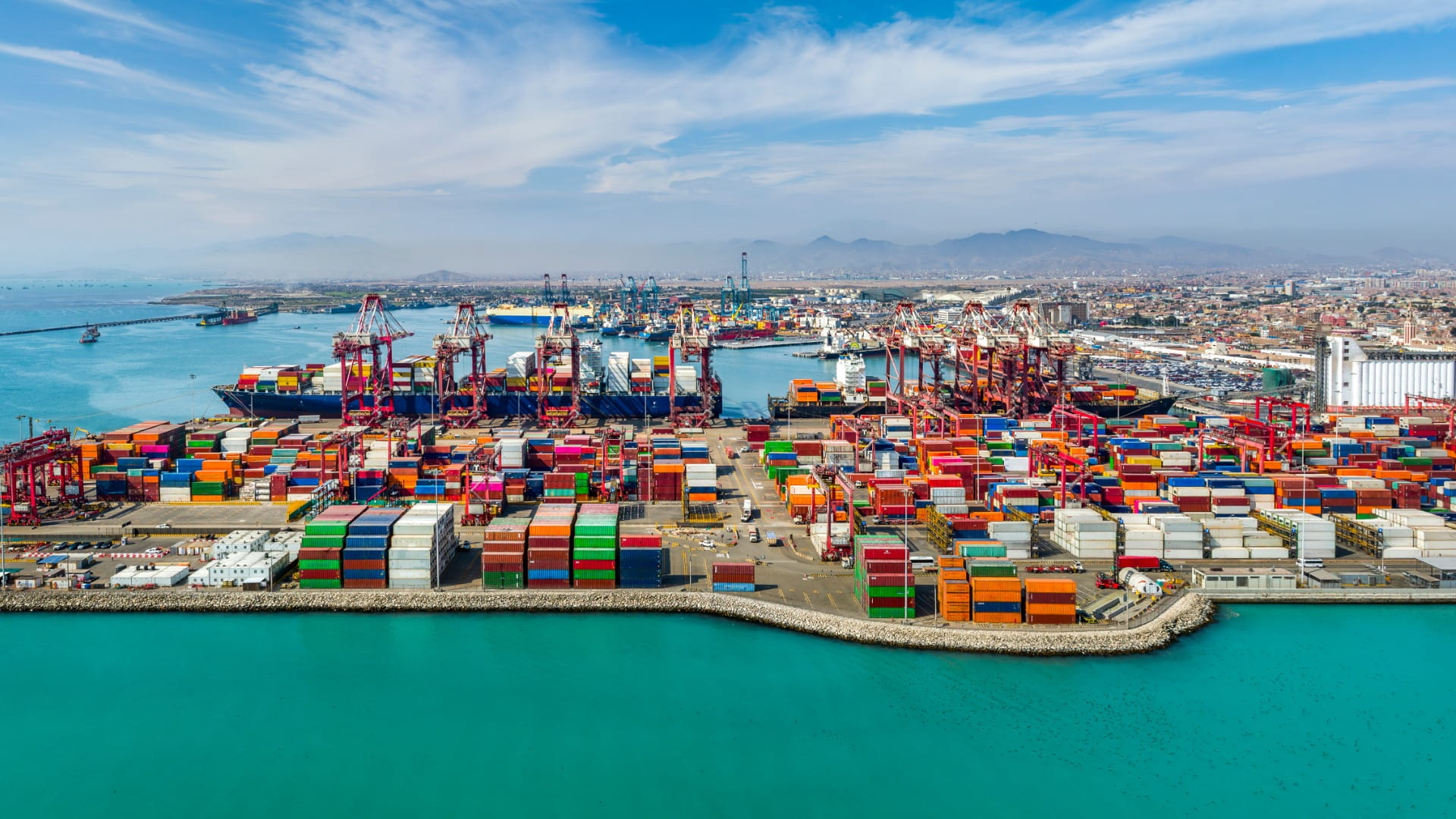
In 2007, I arrived in Peru to complete an initial project to modernise the Port of Callao in Lima on behalf of DP World. After that project was completed and showed success, Haskoning decided to set up a branch office to use as a hub across all of Latin America and the Caribbean.
In the near-20 years since then, much has changed across the maritime sector. One thing has stayed the same, however: whether you’re supporting projects in Peru, Mexico, Chile, or elsewhere, world-class expertise, co-ordination across multiple territories, and a clear understanding of what each client needs is key to project success.
Since that first project at the Port of Callao, we’ve continued to offer our world class expertise and consultancy across Peru – and other parts of the Latin America – to improve port and terminal efficiency and develop new maritime facilities at competitive costs.
I’ve learned a great deal about what success looks like, both supporting private terminal operators, marine contractors, and public entities that are involved in port and terminal development.
Preparing the Port of Callao for DP World
In 2006, the government of Peru began an initiative to modernise ports and terminals in the country, and transition state-owned and operated ports and terminals to private concessions.
However, even with these new concessions in place, Peru’s ports needed extensive infrastructure modernisation to increase capacity and accommodate larger vessels and growing container and cargo volumes
When Dubai Port World (DP World) won the concession for Callao’s North Dock, it commissioned Haskoning to provide engineering services, field and tender support, and construction supervision.
As this was one of the first port modernisation project in Peru, we had to go through all government approvals. That meant reaching agreements with the Ministry of Transport and National Port Authority on how to prepare all the documents and getting technical approvals to develop and build the new terminal facilities.
In this sense, Haskoning’s work at the Port of Callao operated as a pilot project, establishing a format that is still being used for many other projects in Peru.
In fact, this project was such a success, that Haskoning has been commissioned to return and expand the port further. We’re currently working with the port to extend the quay wall and yard capacity, potentially increasing container storage capacity by 50%.
From container and vessel size challenges to climate adaptation and electrification
Many of the initial projects I saw in the region were focused on modernising port and terminal infrastructure to be able to receive larger vessels, increase terminal operational efficiency, and improve cargo throughput. Since then, port development faces another challenge around reducing emissions through terminal electrification.
Now, we’re seeing more ports in Peru – and beyond – looking carefully at how they can minimise emissions and their vulnerability to the impacts of climate change.
We worked with all main ports in Peru (Paita, Salaverry, APM Terminals Callao, Paracas, Matarani, Shougang), to modernise their terminals. Naturally, that meant supporting the new terminal operator with technical work, obtaining approvals, and demolishing and reconstructing parts of the terminal while the existing terminal is still in full operation.
A key benefit here wasn’t just preparing the port for larger vessels and cargo volumes. We also helped the terminal operators transition from diesel to electric-powered quay cranes, yard cranes, and other port equipment.
My colleagues across Haskoning are always keeping an eye out for opportunities to protect ports against the impacts of climate change, as well as supporting electrification. Many projects we conduct include feasibility studies for electrical power, and climate risk assessments to futureproof port operations.
The importance of multi-disciplinary collaboration
While the challenges facing ports have shifted from just capacity to include protections against continued climate impacts, the keys to project success are remarkably similar.
It’s crucial to view the entire project – planning, design, installation, and operation – as a connected whole. By thinking about how your finished port will operate during the earliest planning stages, you’re much more likely to end up with a successful, impactful result.
In addition, whether you’re expanding ports or making them greener, you need experts in multiple disciplines and careful project management to ensure they work with – rather than against – each other.
And let’s not forget that you also need local experts that understand the unique context of the area you’re operating in.
Getting all these experts together is one challenge. The real obstacle though is ensuring everyone pulls in the same direction. In that sense, project and stakeholder management is a vital component.
That’s something Haskoning brings to all its projects. From our hub in Peru, we bring experts from around the globe to support projects throughout Latin America and the Caribbean.
In fact, over the last two decades, our team has successfully delivered projects of all shapes and sizes in nearly every country across Latin America and the Caribbean.
From Mexico, Guatemala, Costa Rica, El Salvador, Dominican Republic, and Colombia to Venezuela, Guyana, Ecuador, Chile, Argentina, Uruguay, and Brazil, we’ve delivered work from our local office with support from Haskoning’s European HQ.
That means co-ordinating projects carefully to match multiple time zones and ensuring our systems are robust and keep everyone aligned around the same information. But the results speak for themselves.
Bringing cost savings and efficiency to all of the Americas – and beyond
We’ve achieved great things throughout the region. In one case, we supported a marine contractor during an EPC tender and were able to cut terminal construction costs from $200 million to $100 million by carrying out a detailed operational analysis – leading to an optimised port layout and modified terminal works.
I also managed projects at the Port of Puerto Quetzal, Guatemala, where we supported the design of a new container terminal and hydraulic works (tidal inlets) that significantly reduced the port’s flood risk.
Wherever your facility is based, cross-discipline collaboration is crucial
It’s been such a privilege to bring Haskoning’s global expertise and local insights to ports and terminals throughout the Americas from our hub in Peru.
Though the challenges ports face now are very different to what the region was experiencing two decades ago, much of the solution remains the same: world-class experts from a range of disciplines collaborating effectively in combination with state-of-the-art port design technology and a strategic view of port operations and infrastructure.
If reading this has made you think about the challenges you face in your port or terminal, please don’t hesitate to get in touch. My team and I are ready to discuss your needs and find a way forward.
Discover more
 Maritime
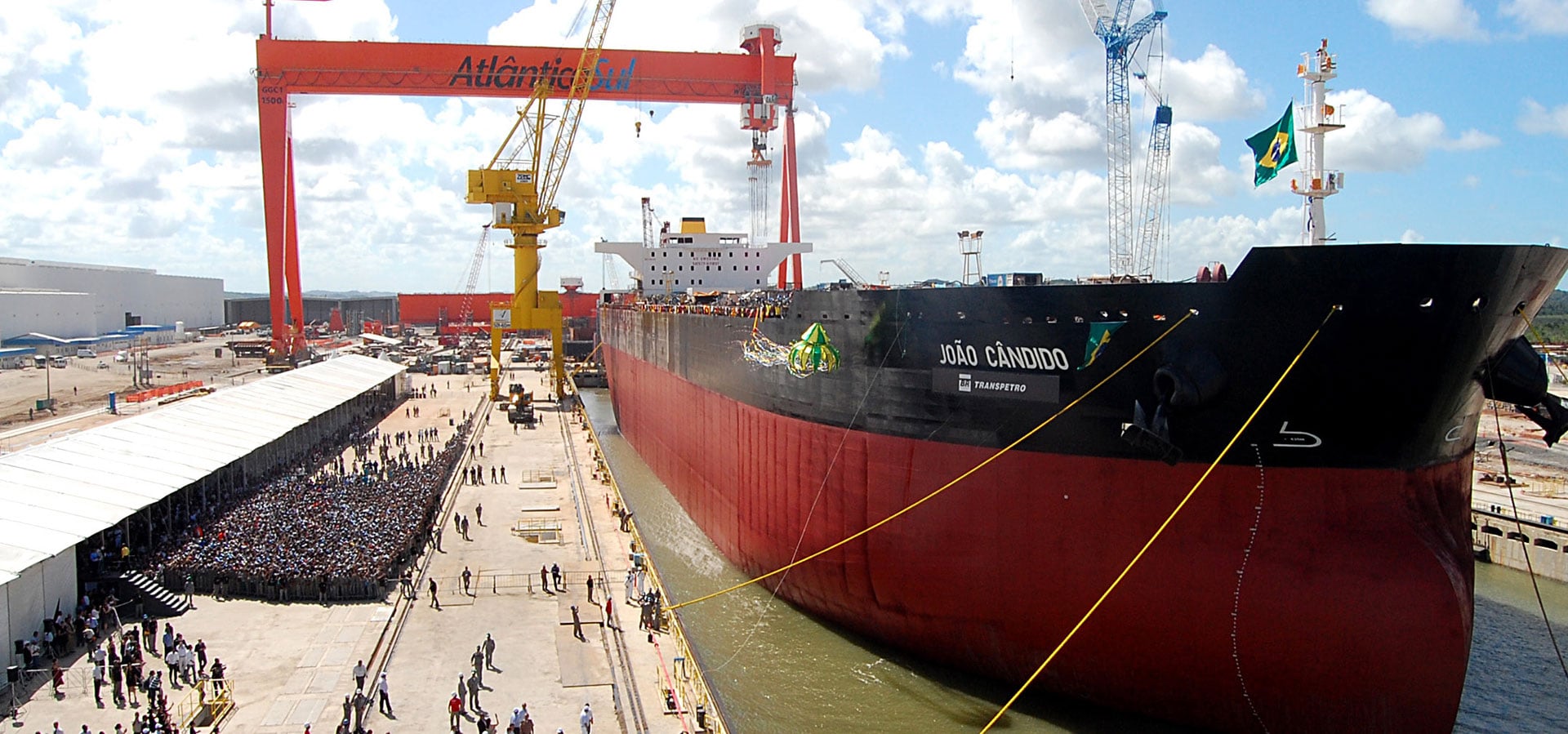
Dock gate and drainage system design for Suape Shipyard Brazil
 Maritime
Find commercial success with a Green Port Strategy
 Maritime