Where Digital Twins meet trains
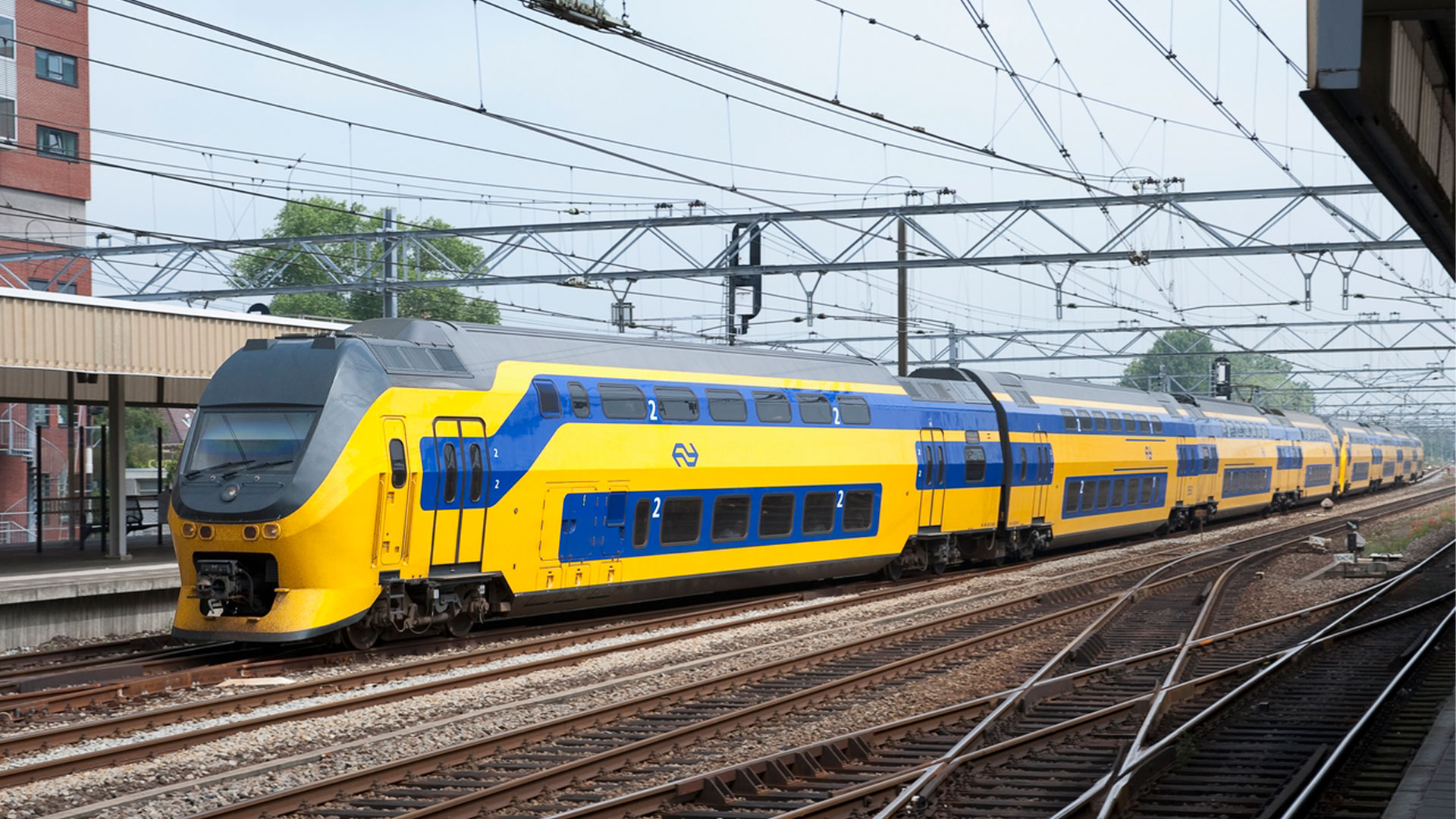
We helped NS to design a new, sustainable digital strategy, using digital twin-based platforms with complex event processing and edge computing. As a result, passengers, staff, and engineers are better informed and can do their jobs more easily. And a generic multi-purpose approach has reduced the total cost of ownership.
Project facts
- Client
- Nederlandse Spoorwegen (Dutch Railways)
- Location
- Netherlands
- Date
- 2015 – 2019
- Challenge
- Unifying multiple data sources on train types with different configurations had to be managed in a secure, robust and scalable way. Furthermore, we needed solutions for “over the air” data traffic and software updates on sometimes unstable 4G networks.
- Solution
- A variety of techniques like technical abstraction layers, virtualisation, the use of cloud computing, security appliances, network virtualisation, and API’s were used to create an architecture that could deliver the services needed. Hans Tönissen, Program Architect
The challenge
Unlocking value in train data
Today, trains are effectively moving computers, generating vast quantities of data. Harnessing that information – including location, speed, carriage configuration, seat occupancy, and equipment health – is as essential for engineers planning maintenance as it is for passengers planning their journey.
The Netherlands’ national rail network, NS, asked us to deliver a sustainable digital strategy that could unify and interpret these siloed data sources to improve information and deliver new, real-time services for passengers and staff alike, regardless of the type of train.
The solution
Combining the latest digital techniques
To make sense of the data, we designed and built digital solutions using the latest techniques – combining digital twin-based platforms, security appliances, complex event processing, and edge computing.
The result
A smarter, more efficient railway
Through its new platforms, NS is better able to provide passengers with accurate, up-to-the-minute information to help them plan their journey. The network can also devise and offer new services in real time to improve satisfaction and unlock revenue.
The impact is just as great for the network’s own staff. Drivers have access to enhanced advisory services so they’re always well informed, and engineers can organise predictive maintenance where it’s needed most – minimising disruption and reducing service costs.