Nature-based coastal protection pilot for Pamarawan, Malolos City
Project facts
- Client
- The Netherlands Enterprise Agency (RVO)
- Location
- Barangay Pamarawan, Malolos, Bulacan, Philippines
- Date
- 2024 – 2026
- Challenge
- Flood-prone island community facing chronic coastal flooding and livelihood disruption.
- Solution
- Nature-based coastal protection using bamboo, oyster bags, sediment traps, community-focused design and maintenance.
The challenge
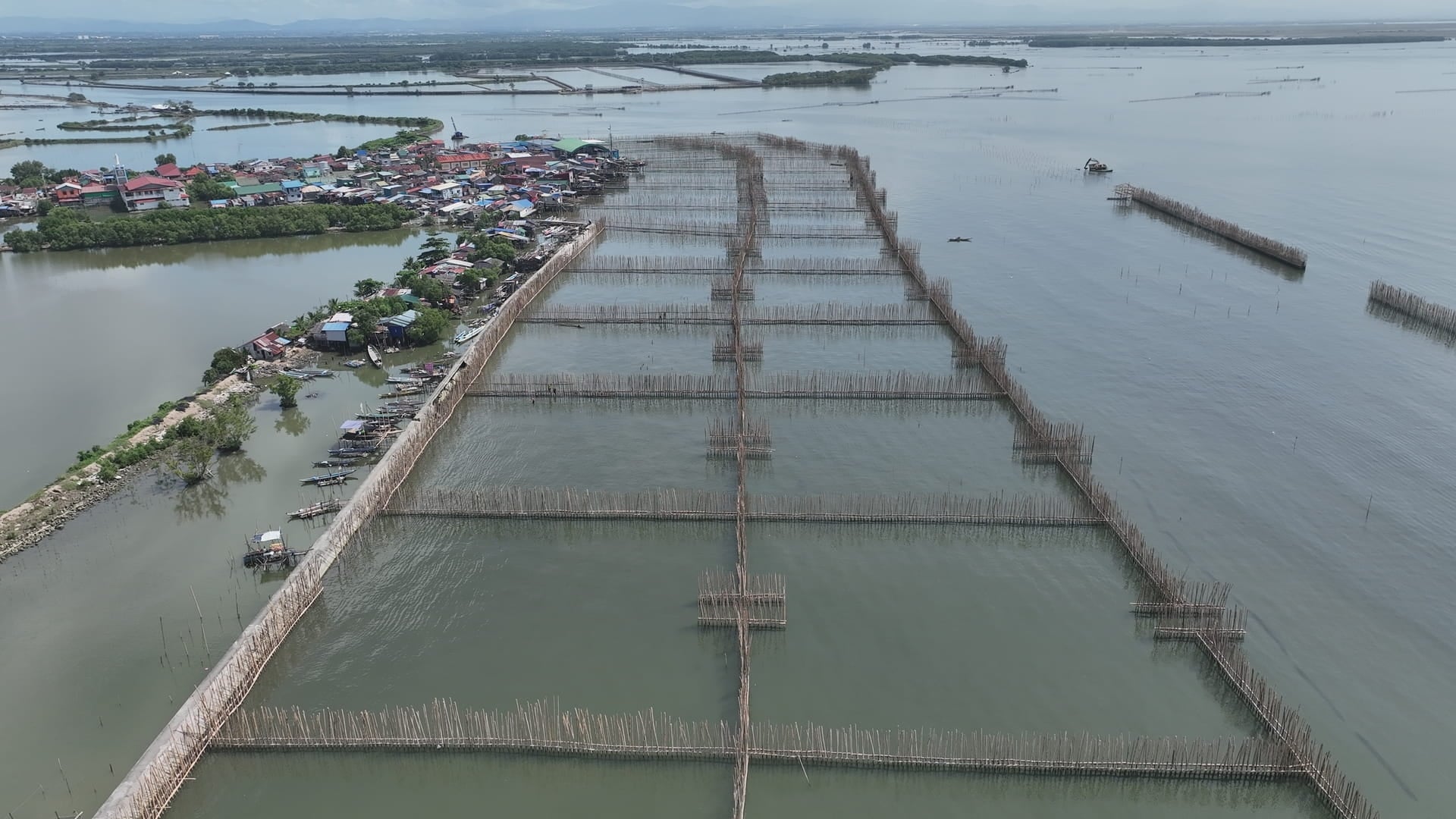
Barangay Pamarawan is a small, flood-prone island community in North Manila Bay in the Philippines that experiences frequent coastal and fluvial flooding. There risks are intensified by sea level rise and land subsidence, leading to increasing disruption to fishing, schooling, local trade and access to the mainland.
With most residents facing economic challenges, each flooding event affects household income and food security. Surrounded by open coast, rivers and tidal waters, this community has been identified as one of the most vulnerable areas in the North Manila Bay Flood Protection Strategy, highlighting the urgent need for a sustainable and inclusive flood protection approach.
The solution
Building on the earlier strategy phase, Haskoning transitioned into the Detailed Engineering Design and now leads the construction of the Philippines’ first implemented Nature-based Solutions (NbS) coastal protection pilot.
Inspired by successful NbS sediment trapping concepts for mangrove restoration in Indonesia and adapted to the specific coastal and typhoon conditions of North Manila Bay, the project combines bamboo and oyster breakwaters to reduce wave energy, oyster bags to encourage reef and habitat recovery, sediment traps to gradually raise the seabed, and areas for mangrove regeneration. Together, these measures form a natural defence system that reduces storm impacts, rebuilds coastal elevation and supports new livelihood opportunities through oyster and fish production.
Co-designed with the local government units and residents and supported by Partners for Water, the Netherlands Enterprise Agency (RVO) and Rijkswaterstaat, the project incorporates local knowledge of tides, sediment transport, erosion patterns and fishing routes. By combining engineering expertise, natural materials and community insights, the pilot demonstrates a scalable, low-carbon alternative to conventional hard coastal defences.
The result
As construction progresses, early outcomes are already visible. Sediment is accumulating within the project area and wave energy reaching the community has reduced.
The project has attracted strong interest from national agencies and development partners, who see it as a potential model for scalable, nature-based coastal resilience.
With 80–90% of construction labour coming directly from Pamarawan, the project has strengthened local ownership and provided vital income opportunities. This active community involvement lays the foundation for long-term community-led maintenance — a key advantage of choosing nature-based structures over traditional hard defences.
For Pamarawan, the pilot delivers more than physical protection. It restores hope, strengthens livelihoods, and empowers the community to build long-term resilience through nature and partnership.
How we Enhance Society Together
SDG 11
Sustainable Cities & Communities: Enhances safety and accessibility for a vulnerable island barangay.
SDG 13
Climate Action: Strengthens resilience to climate-related coastal hazards through adaptive, low-carbon solutions.
SDG 14
Life Below Water: Supports habitat restoration, oyster reef recovery and sustainable aquaculture.
SDG 15
Life on Land: Enables mangrove regeneration and improved biodiversity over time.
Related content

Got a question?
Contact our Climate Resilience experts!