Mondelēz R&D team tests breakthrough tech with simulation
Project facts
- Client
- Mondelēz International
- Location
- Bournville, UK
- Challenge
- Understanding the impact of breakthrough technologies
- Solution
- Flexible and user-friendly simulation model to provide answers quickly
- Impact
- Validated capital expenditure and optimised batch processes
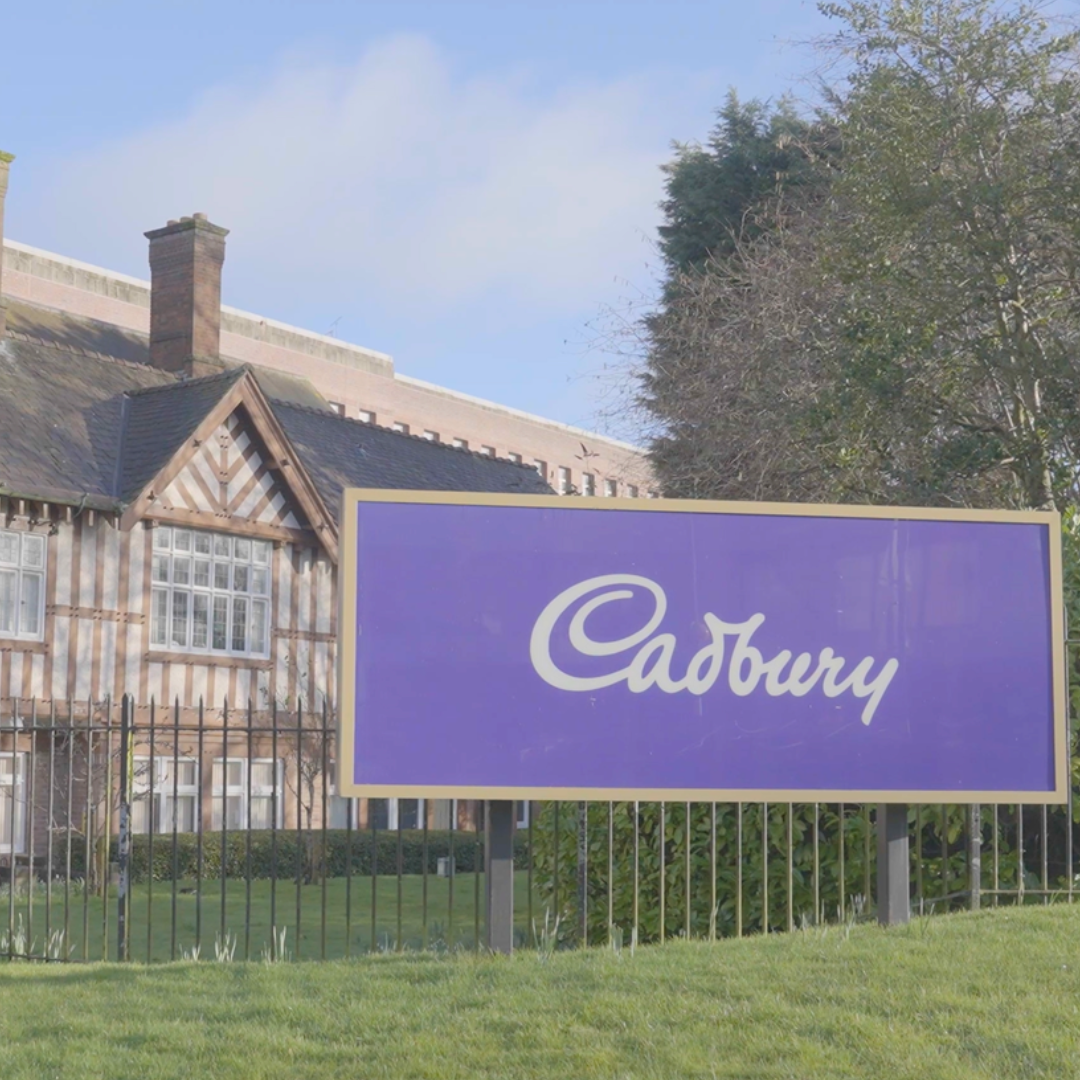
Cadbury is a heritage British confectionery company owned by Mondelēz International. Since 1879, it has manufactured chocolate in Bournville, UK, where research and development also takes place.
For more than 15 years, Cadbury has worked with Haskoning and used our Witness simulation software to model existing chocolate manufacturing processes. This is an interesting new simulation use case with the R&D team, which involved modelling novel technologies and processes.
The challenge - Understanding the impact of breakthrough technologies on production processes
A key part of the R&D team’s remit involves assessing how breakthrough technologies will affect chocolate production processes. This isn’t straightforward, as Kalim Yasin-Guilfoyle, Senior R&D Engineer, explains: “Comparing throughput and capacity gains from new technologies is challenging. It’s never like for like. For example, when you’re considering innovations, different options involve different numbers of units, costs and energy consumption – and have different implications both up and downstream.”
The team’s standard modelling approach involved static spreadsheets, with the most promising options tested through physical trials in the factory. They wanted to rely less on these physical trials – which are expensive and can be hard to schedule – and move towards digital testing.
"We wanted an innovative way to compare new processes against key criteria so we could benchmark and assess the wider benefits of new tech. There was clear potential for using discrete event simulation to achieve this." Kalim said.
But how to design and build a simulation model to do this – and fast? They turned to Haskoning for support.
The solution - Discrete event simulation – accessible to non-experts
Haskoning experts and the R&D team collaborated closely through a rapid simulation model development process, working iteratively to deliver an effective result.
Defining an accessible model with the right detail
A key factor in the design process was the emphasis on having a simulation model and associated data output accessible to non-experts. “The vision was to avoid complexity in the model where it wasn’t needed. We wanted it to be as easy as possible for people to answer questions without getting overloaded in detail,” Kalim explained.
To define the appropriate level of detail, we started with a scoping study. This collaborative process brought out all the questions the model needed to answer and defined the goals related to those questions. This then dictated what needed to be modelled, and at what level of detail.
"The Haskoning consultants were great at defining the scope and the stages, along with what was required at each point. This helped us understand what we actually needed and what was a preconception that could be addressed more effectively in another way. The scoping process also helped us clarify and prioritise our objectives so we could understand what was essential, what was nice to have and what could be a future add-on." Kalim added.
User-friendly and flexible
The R&D team’s original vision involved having the entire simulation experience in Witness. However, based on the goals defined in the scoping study, the Haskoning consultants recommended adding a custom Excel-based interface – because it would provide faster results and greater flexibility.
Kalim said: "The recommendation to use an Excel-based front end was excellent. It streamlined the process of using the model, making it easy to create and run multiple scenarios quickly."
Users now have the flexibility to run simulations in Witness or through the Excel interface, depending on their preference and time pressure. This flexibility has also provided more scope for using the model in future projects.

We immediately used the model...it gives us confidence in our analyses and builds trust from stakeholders that we have an evidence base covering all implications.
The impact: Fast results, increased confidence, ongoing value
The model was delivered just 2 months after we started the scoping study. The team gained value-adding insight straightaway. To date, they have used the model in 2 key areas:
- Validating capital expenditure – The R&D team routinely uses the model to compare investment options, understand their impact and validate the business case. The insight is informing financial decisions at a time marked by high energy costs and volatile cocoa prices.
- Optimising batch processes – The team is also using the model to inform process optimisation, examining R&D questions like: “How much capacity do we gain if we reduce cycle times incrementally?” And “If we make incremental cut-backs on cycle time, what is the impact on the product (and is that impact acceptable)?”
Kalim said: “We immediately used the model to test and understand the impact of breakthrough technologies and process innovations. It gives us confidence in our analyses and builds trust from stakeholders that we have an evidence base covering all implications.”
Duncan Brown, Senior Business Development Manager at Haskoning, added: “This project shows what can be achieved when a team champions simulation as a practical decision-making tool and uses it to stay ahead in a competitive market.”