Holyhead Deepwater Jetty Inspection: Digitally transforming maritime asset management
Preserving a vital cruise berth through remote inspection innovation
Project facts
- Client
- Stena Line
- Location
- Holyhead, Anglesey, United Kingdom
- Date
- Completed February 2025
- Challenge
- Ageing jetty infrastructure requiring full inspection in a remote, tidal location
- Solution
- Fully remote, drone-based inspection using high-resolution 3D modelling
The challenge
The Deepwater Jetty at the Port of Holyhead is a critical berth for cruise vessels and other cargo purposes, including offshore wind farm support, contributing over £4.75 million annually to the Welsh economy. When the ageing structure required a full inspection, Haskoning was engaged to assess its condition and recommend remediation works.The scope was extensive: 400 piles, 5 kilometres of beams, 82 crossheads, and 4,000 square metres of deck soffit. Traditional inspection methods were costly, weather-dependent, and logistically complex due to the jetty’s exposed tidal location. Beyond structural integrity, the project aimed to safeguard a key maritime asset that supports tourism, local businesses, and regional development.
The solution
To overcome inspection constraints and align with sustainability goals, Haskoning proposed a digital-first approach. A drone survey captured 35,000 high-resolution photographs over three days, which were processed into a precise 3D mesh model. This enabled engineers and stakeholders to inspect the structure remotely via a browser-based interface, without stepping on-site or requiring specialist hardware.This marked Haskoning’s first fully remote jetty inspection. Engineers could zoom into specific areas, retrieve source images, and log defects directly in the platform. Integrated reporting tools streamlined documentation, while real-time access enabled collaborative review and faster decision-making.
Compared to traditional methods requiring five weeks and multiple engineers, the digital workflow completed the inspection in just two weeks with one engineer and one graduate engineer, saving 60% in time and significantly reducing labour costs. The remote solution also reduced carbon emissions and enhanced safety, setting a new benchmark for maritime infrastructure inspections.
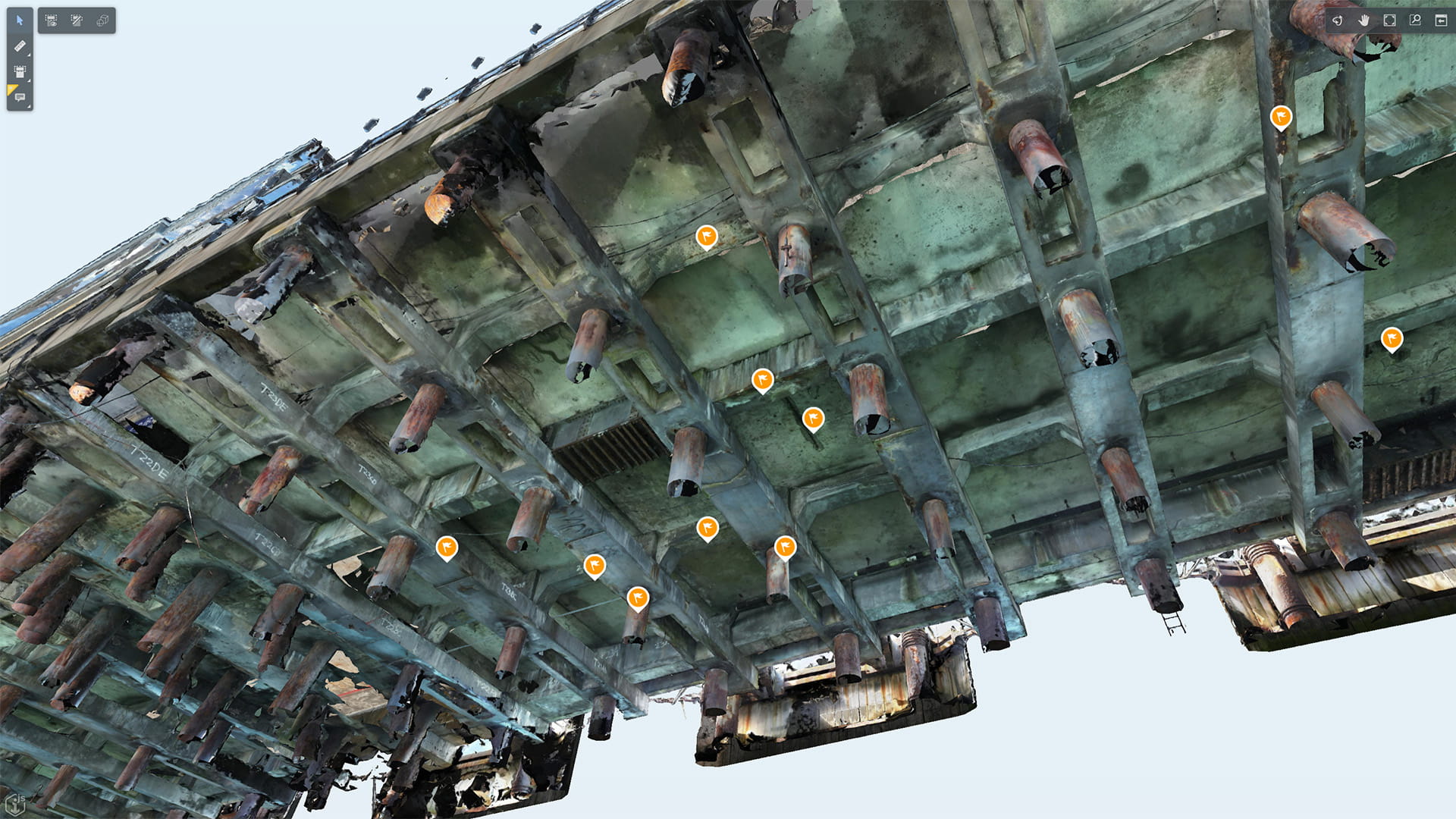
View on complex deck soffit mesh model showing defect markers
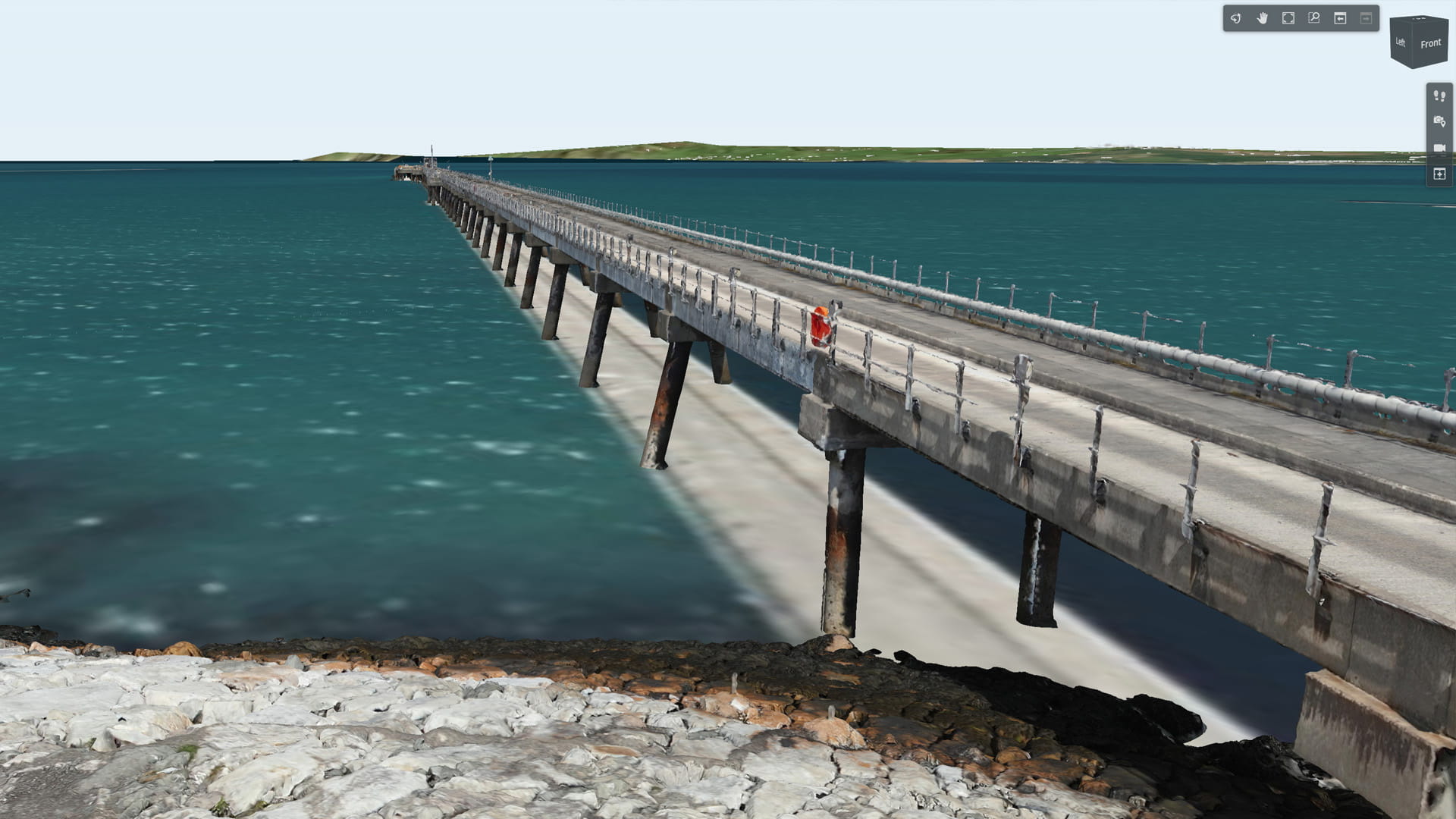
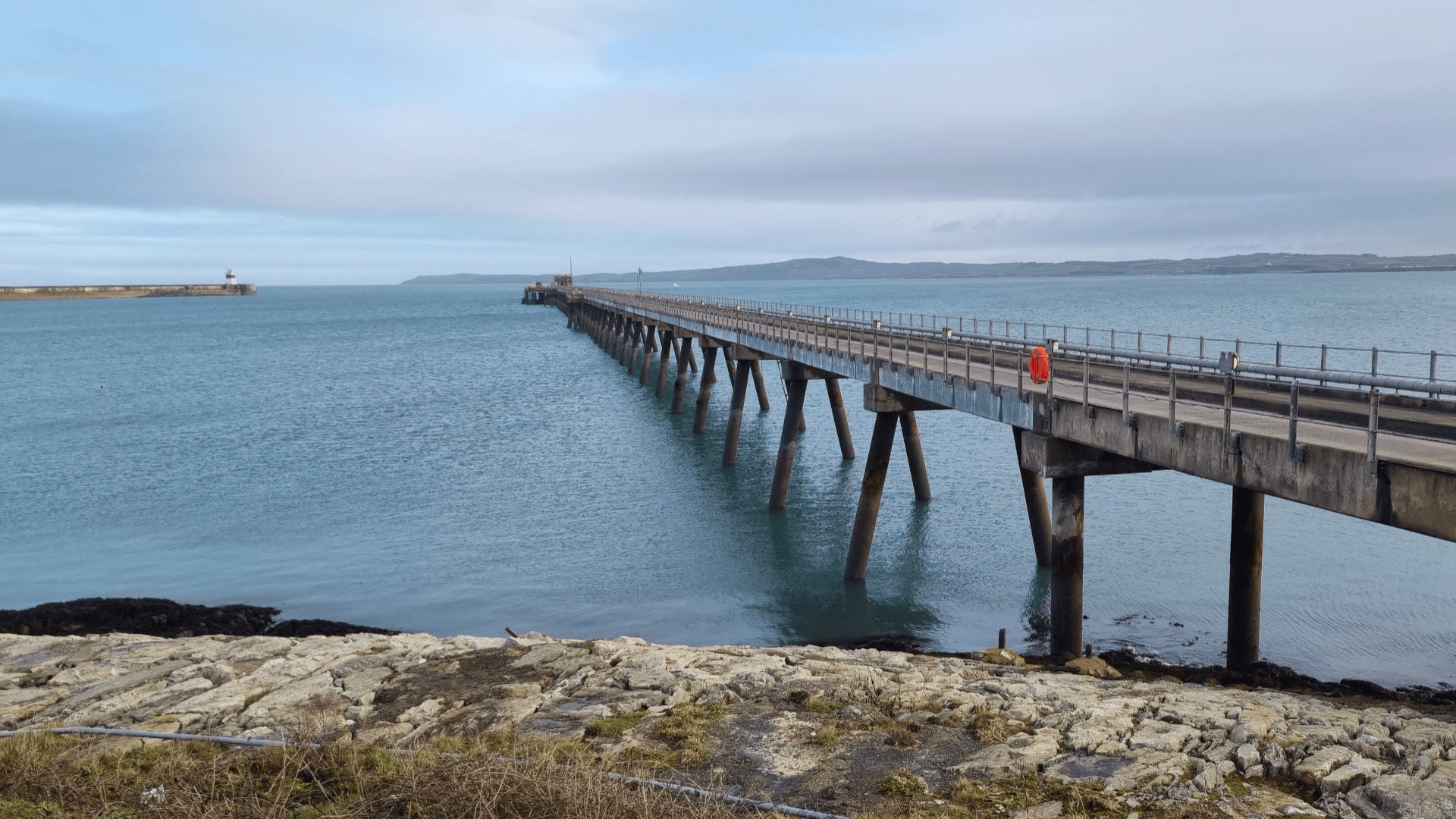
View on jetty approach out almost 1km into the Irish Sea
The result
- 60% faster: Completed in two weeks instead of five
- 75% greener: Significant reduction in fuel use and carbon emissions
- 100% remote (with minimal exceptions): Once the initial survey was completed, the digital model enabled inspections to be carried out entirely remotely and repeat “visits” undertaken at leisure, eliminating tidal/weather delays. Only one brief site visit was required to check areas the drone couldn’t capture due to access restrictions.
- Safer and smarter: Improved defect detection and reduced inspection risks
- Cost-efficient: Removed boat hire, travel time, and subcontractor fees
- Community impact: Safeguarded a vital marine infrastructure asset that underpins £4.75 million/year in tourism and supports other critical sectors such as offshore wind and cargo operations.
This project reinforced Haskoning’s commitment to sustainability, innovation, and community impact, delivering technical excellence while supporting economic growth and environmental stewardship in North Wales.
For more information about this project and our services, contact Gary Barr.

Read more about maritime challenges and our solutions

Due diligence and transaction advisory services.png?h=1080&iar=0&w=1920&hash=4ae213babd53026e1cbfe98f0f416b0e) Consultancy
Consultancy
Consultancy