High-quality public transit in the Leiden – Katwijk urban corridor
Project facts
- Client
- Province of Zuid-Holland
- Location
- Leiden–Katwijk, Netherlands
- Date
- 2019-2026
- Challenge
- Vision for the urban network around the HQPT link Leiden–Katwijk.
- Solution
- Dedicated bus lane with transport hub, aligned with housing development plans and enhancing the vision for the urban corridor.
Development of the corridor
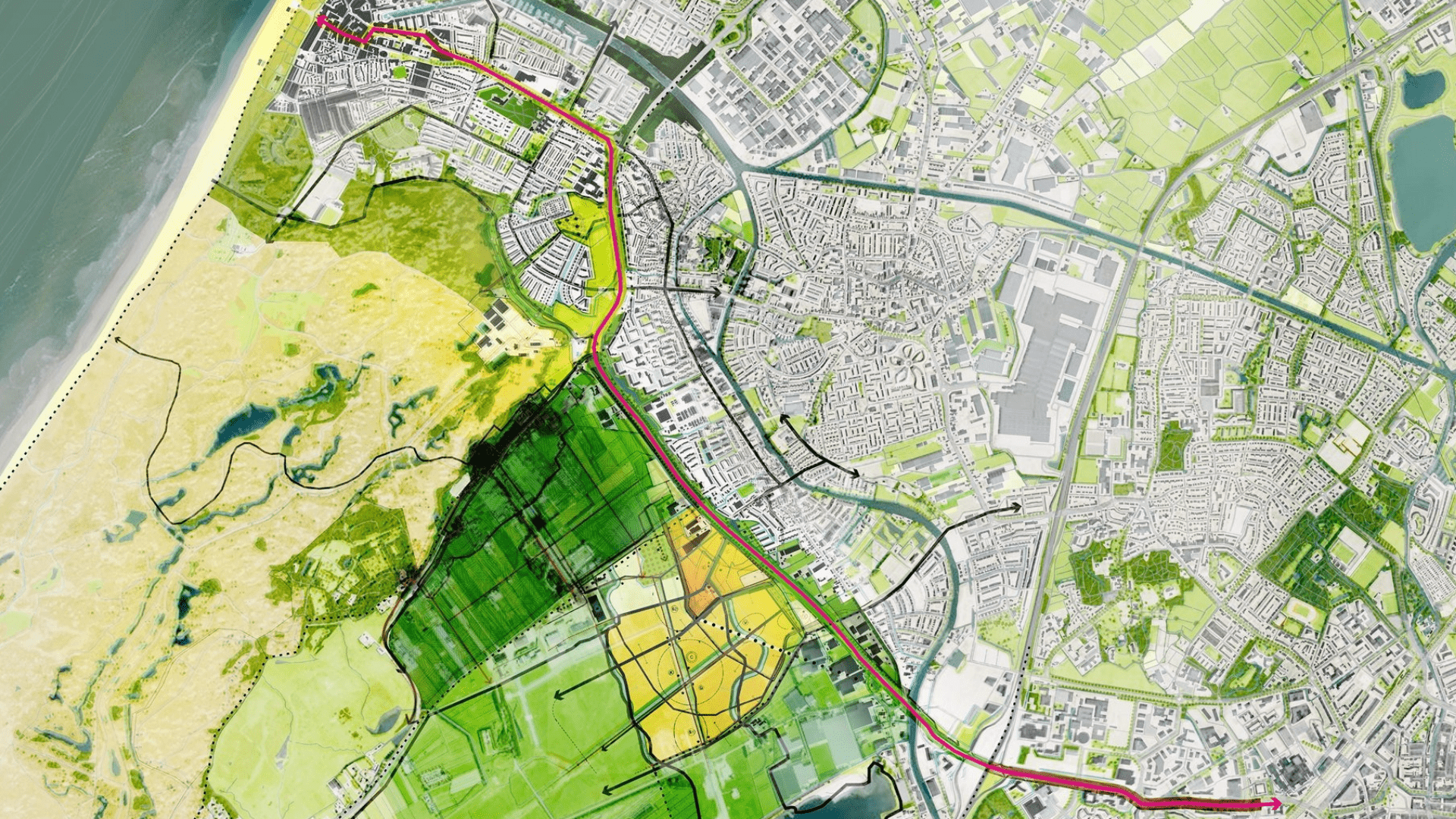
Between Leiden and Katwijk lies Valkenhorst, a future residential area, of around 5,000 houses on the former Valkenburg airfield. The bus corridor Leiden Central – Katwijk – Noordwijk is one of the high-quality public transport corridors in the Randstad (R-net), serving this new district.
Haskoning was commissioned by the Province of South Holland to design the bus lane from Leiden to Katwijk. The assignment involved not only process management, technical elaboration, and design capacity, but also development of the vision for the urban corridor, including landscape design and traffic integration of the new bus lane, the residential district and the integration of archaeological heritage. The corridor connects to three public transport stops, one of which is a mobility hub.
The ultimate goal: to create a healthy living environment with excellent accessibility delivered by sustainable transport opportunities.
This vision evolved into a cohesive design connecting municipal structures to Natura 2000 areas.
Dedicated bus lane aligned with housing development plans
Haskoning, together with a landscape architect, prepared an area vision and layout plan to ensure proper integration of the bus lane and bus stops with the changing surroundings.
Using our research by design approach, we determined the best route and how it could be arranged from a traffic perspective, also considering the safety of pedestrians and cyclists.
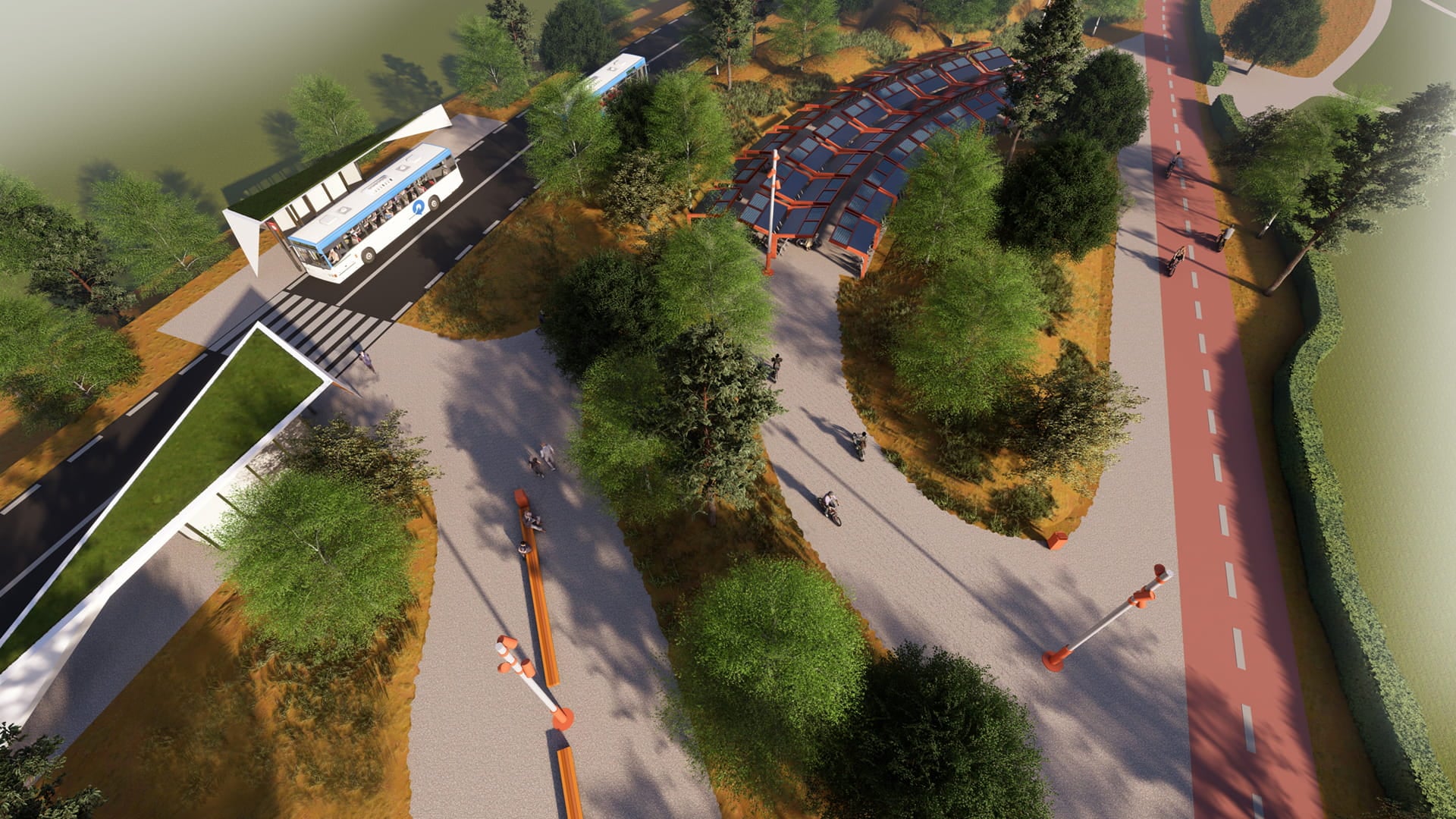
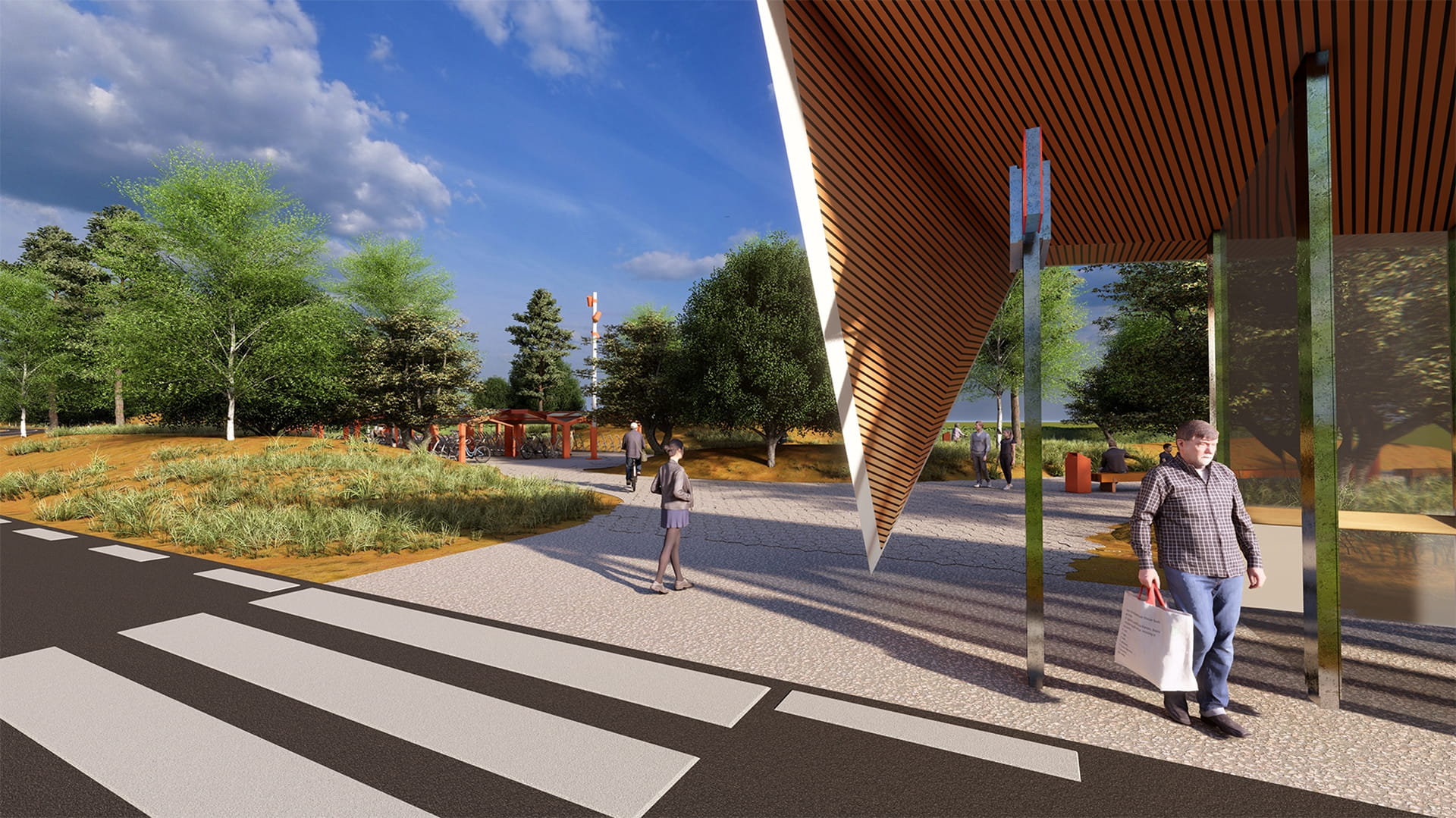
The Valkenhorst stop will become both a destination and a transfer hub and be fully integrated within a planned square.
The assignment also looked for opportunities related to sustainability, climate resilience, ecological value, and cycling routes, and connected to adjacent landscape and spatial plans.
Key innovations include a new mobility hub for the R-net programme, ambitious sustainability goals, and measures such as swallow walls, park structures, and geopolymer concrete. By transforming a standard infrastructure project into an integrated development, the project sets a benchmark for sustainable mobility, biodiversity, and climate adaptation. Creating a safer, greener, and more liveable environment for future generations.
Mobility, including high quality public transit, is closely intertwined with the housing development task. Thanks to the spatial integration plan developed by Haskoning, we obtained the decision making information needed to make the right choices.
Better connections for an attractive and healthy living environment
To increase the attractiveness of the new residential area, the hub and other stops along the bus lane are being developed. This facilitates and encourages residents to use HQPT.
The separate, dedicated bus lane makes the connection faster and safer because different traffic modes intersect less often. Two new grade-separated crossings are part of the plan: a viaduct and a bike tunnel. This also improves traffic flow on a busy provincial road.
The faster connection is also beneficial for the municipality of Katwijk, which, despite having 67,000 inhabitants, does not have its own railway station.
Haskoning is contributing to the final design and will remain involved until completion. It has been agreed that the bus will be operational before the first homes in Valkenhorst are delivered.

Mobilityenquiries
Contact our Mobility experts
Mobility