Why disaster response is no longer enough for the Philippines
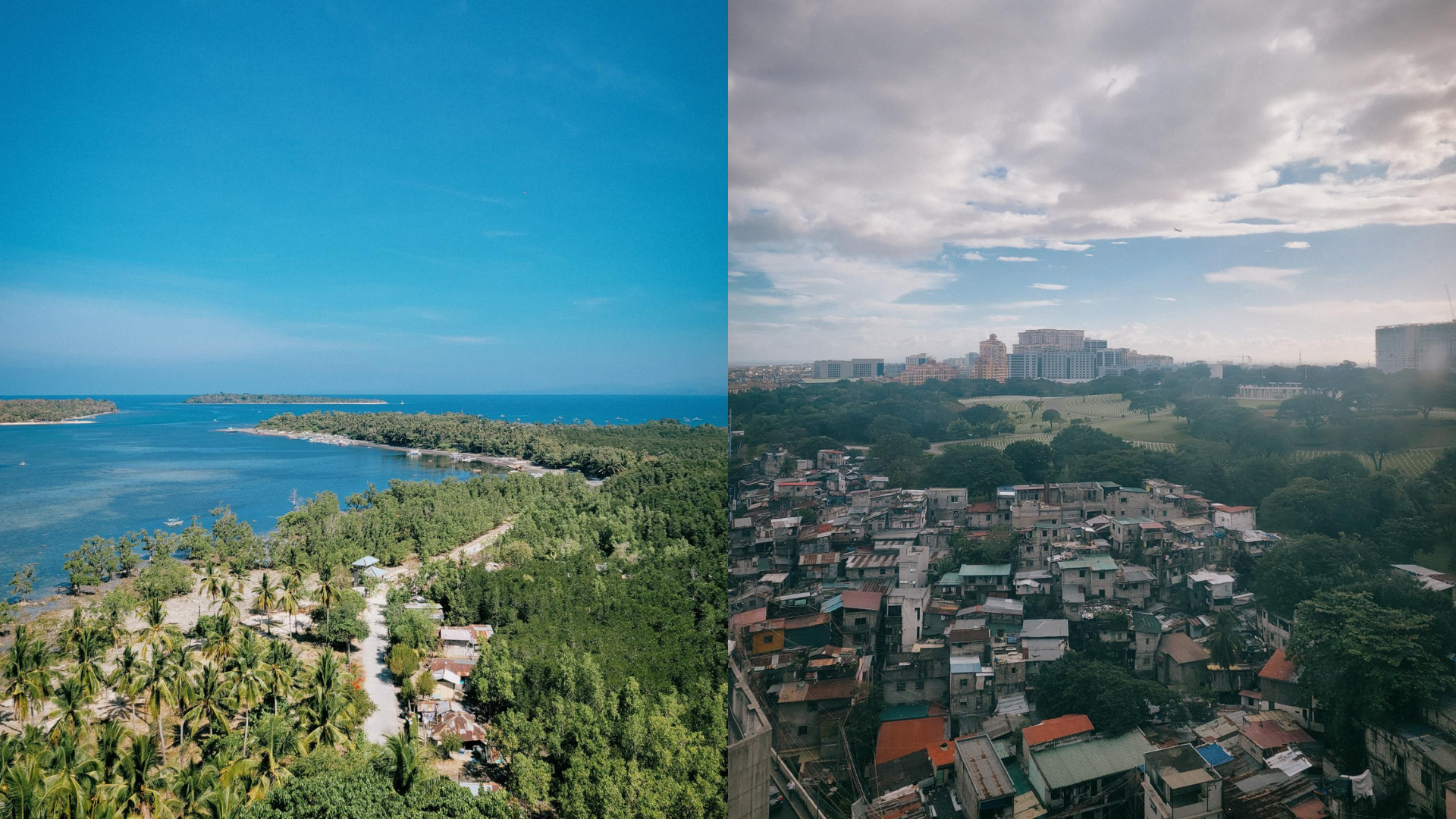
Copyright: Alyanna Maneja

AlyannaManeja
Filipinos have faced overlapping crises that have tested the limits of our resilience. A strong earthquake in Cebu in September 2025 disrupted mobility, damaged infrastructure, and added another layer of strain to areas already stretched thin. In the weeks that followed, Typhoon Kalmaegi (locally known as Tino) and Typhoon Fung-wong (Uwan) brought widespread flooding and displacement across Luzon and parts of the Visayas, leaving communities scrambling to protect homes, food supplies, and livelihoods.
These events forced families to evacuate for safety, while schools and transport systems were suspended, and daily routines were upended in ways that have become painfully familiar. These events no longer feel extraordinary. Increasingly, they feel expected.
A country trapped in recovery mode
The Philippines is now widely cited as the world’s most disaster-prone country, ranking highest in the WorldRiskReport 2025 with an overall score of 46.56, released by Bündnis Entwicklung Hilft (BEH) and the Institute for International Law of Peace and Armed Conflict (IFHV) at Ruhr University Bochum. This is an unfortunate distinction shaped not only by the frequency of floods, storms, and earthquakes but by the scale of their impacts on people, livelihoods, and infrastructure. This reputation persists because risk continues to accumulate faster than it is reduced. In many places, development has expanded into exposed zones, natural buffers have been degraded, and land-use decisions have not kept pace with a rapidly changing climate.
Year after year, billions are allocated to emergency response, relief distribution, and reconstruction. In 2026 alone, Php 39.8 billion has been set aside for these efforts. These investments save lives and provide urgent support in the short term, yet they can return some of the communities to the same fragile conditions they faced before the last storm. Over time, the country has strengthened its capacity to mobilize during crises such as coordinating rescue operations, deploying social safety nets, and restoring essential services. But the ability to respond effectively has not been matched by an ability to prevent or reduce the worst impacts from recurring with each typhoon season. The cycle of damage and repair continues, and with climate extremes intensifying, that cycle is becoming increasingly costly for government, businesses, and communities.
Why reactive spending will never be enough
Disaster response will always be essential, but response alone is not resilience. When planning focuses mainly on what to do after floods, landslides, or earthquakes, repeated loss becomes an accepted outcome rather than an avoidable one. Much of today’s development and infrastructure planning still relies heavily on historical climate data, assuming that tomorrow will behave like the past. Yet climate projections reveal a different reality, one defined by stronger typhoons, heavier rainfall, rising sea levels, and interconnected hazards where a single event can trigger cascading failures across transport, housing, food supply, and critical services.
As climate extremes intensify, reactive spending will inevitably keep rising while underlying vulnerabilities remain. This is the gap that many local governments are struggling with: they are investing more but reducing future risk too slowly.
It is here that systems thinking becomes critical. Disasters are not isolated events; they are system failures. Flooding is never just about water. A flooded road can cut off access to markets, schools, and hospitals, while a damaged port can disrupt food and fuel supply. When transport, housing, critical infrastructure, and land use are planned in silos, one storm can trigger multiple crises. Preparedness depends as much on governance and coordination as it does on engineering solutions designed to function under future climate conditions, long before a typhoon even has a name.
This interconnectedness is exactly why reactive action, no matter how swift or well-funded, cannot keep pace with increasing climate risks.
From relief to risk reduction: what climate adaptation looks like in practice
Building resilience in the Philippines requires a shift toward anticipatory adaptation, acting before disasters strike and planning for future climate realities rather than past patterns. It means embedding climate risk into decisions about where we build, what we protect, and how essential services can continue under extreme conditions, guided by standards and investments that prioritize long term safety over short-term efficiency.
In practice, this includes a mix of policy, planning, engineering, and land use measures such as resilient infrastructure standards, risk-informed zoning, and strategic relocation that reduce exposure and vulnerability over time.
Most importantly, adaptation changes the country’s central question from “How do we recover?” to “How do we reduce loss in the first place?”
Turning this shift into reality requires translating climate science into action. In my work, the data already shows us where future risks will be, but the real challenge lies in turning that knowledge into planning decisions that communities can actually implement. When risk-informed insights guide how land, infrastructure, and investments are designed, resilience becomes proactive rather than reactive, and the benefits are felt long before the next storm approaches.
My experience working directly with Local Government Units (LGUs) underscores that while many communities are deeply aware of their vulnerabilities, they often lack access to data, technical capacity, and the cross-sector coordination required to implement long-term resilience strategies. Empowering these institutions with the right tools, governance structures, and planning support remains one of the most urgent steps toward meaningful disaster preparedness.
A call for collaboration
Transitioning from relief to anticipatory adaptation requires the collective effort of national agencies, local governments, private sector partners, scientific institutions, and community organizations. It is not about attributing fault for past decisions, but about recognizing that the climate and development realities of the Philippines demand a new model of shared responsibility. True resilience is built through long-term planning, consistent investment, and governance that prioritizes transparency and coordination across sectors and jurisdictions.
Resilience is not constructed during typhoon season. It is built years before landfall, in planning rooms where land-use maps are updated, in budget deliberations where risk data shapes investment choices, and in partnerships where technical expertise and local knowledge come together.
The storms will keep coming. The earthquakes will continue to challenge our infrastructure and institutions. We can no longer afford to treat each disaster as an isolated incident. The choice now is whether we continue rebuilding the past or finally prepare for the future, a future where Filipino communities are not merely resilient by necessity but protected by design.
This article was originally published in Tribune on 15 May 2026.
Discover more of our climate resilience services and projects


Got a question?
Contact our Climate Resilience experts!